
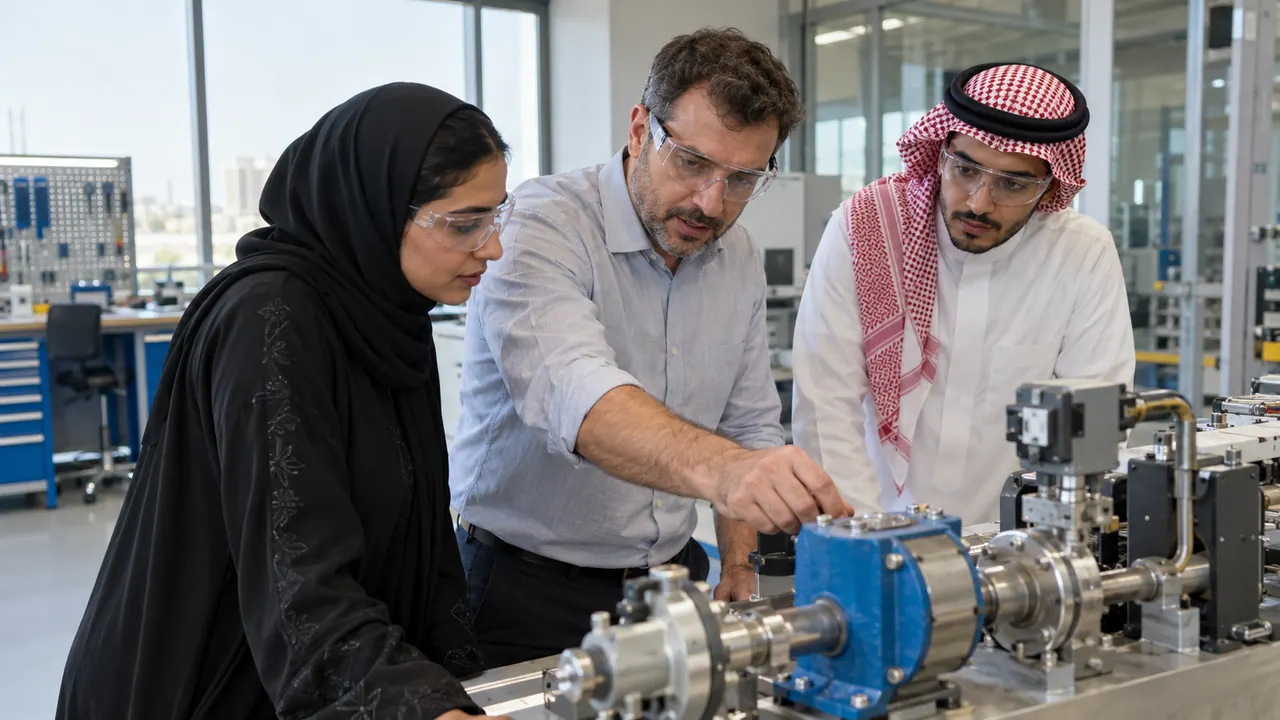
Knowledge transfer is one of those phrases that sounds successful until someone asks what, exactly, has been transferred.
In many Saudi organisations, expatriate expertise has played an important role in building operations, technical capability, governance and project delivery. That contribution should be respected. But national transformation cannot depend indefinitely on knowledge that sits inside a few individuals, disappears with a resignation, or is protected by complexity. The point is not to replace expertise with slogans about localisation. The point is to convert expertise into sustainable capability.
This matters because Saudi Arabia's future depends on deep local competence: engineers, project leaders, HR professionals, digital specialists, finance experts, operations managers, regulators, customer leaders and executives. Knowledge transfer must therefore move beyond shadowing and polite meetings. Watching an expert is not the same as becoming one.
The failures are familiar. The expert is too busy to teach. The Saudi successor is given tasks but not context. Processes are undocumented. Critical decisions remain mysterious. Managers celebrate progress before evidence exists. Then the expert leaves and the organisation discovers that what it called transfer was merely proximity.
Our approach begins by clarifying the critical knowledge. Which roles carry dependency risk? What decisions, processes, relationships, technical skills and judgement must be transferred? Who must receive it? What evidence will show that capability has moved from one person to the organisation?
We then design a transfer plan. This can include role mapping, knowledge inventories, structured shadowing, reverse presentations, decision logs, standard operating procedures, mentoring, assessment checkpoints, communities of practice and manager accountability. The design must make implicit knowledge explicit without pretending that all expertise can be captured in a template.
Delivery means facilitating the process, tracking evidence and supporting both parties. We help experts teach rather than hoard, and help Saudi talent ask better questions rather than wait for permission. We build handover routines, review progress and link transfer to development and succession decisions.
The benefits are profound. Saudi companies reduce dependency risk, strengthen national capability, improve succession, retain institutional memory and demonstrate a serious commitment to Vision 2030. Knowledge transfer is not a farewell ritual for expatriates. It is a business discipline. Expertise has done its job only when the organisation can continue without worshipping the person who first held it.
How HR Delivery Can Help
We help leadership teams translate insight into practical HR action: diagnostic reviews, operating model design, compliance roadmaps, people capability programmes and implementation support. The goal is always clear governance, confident leaders and measurable progress.