
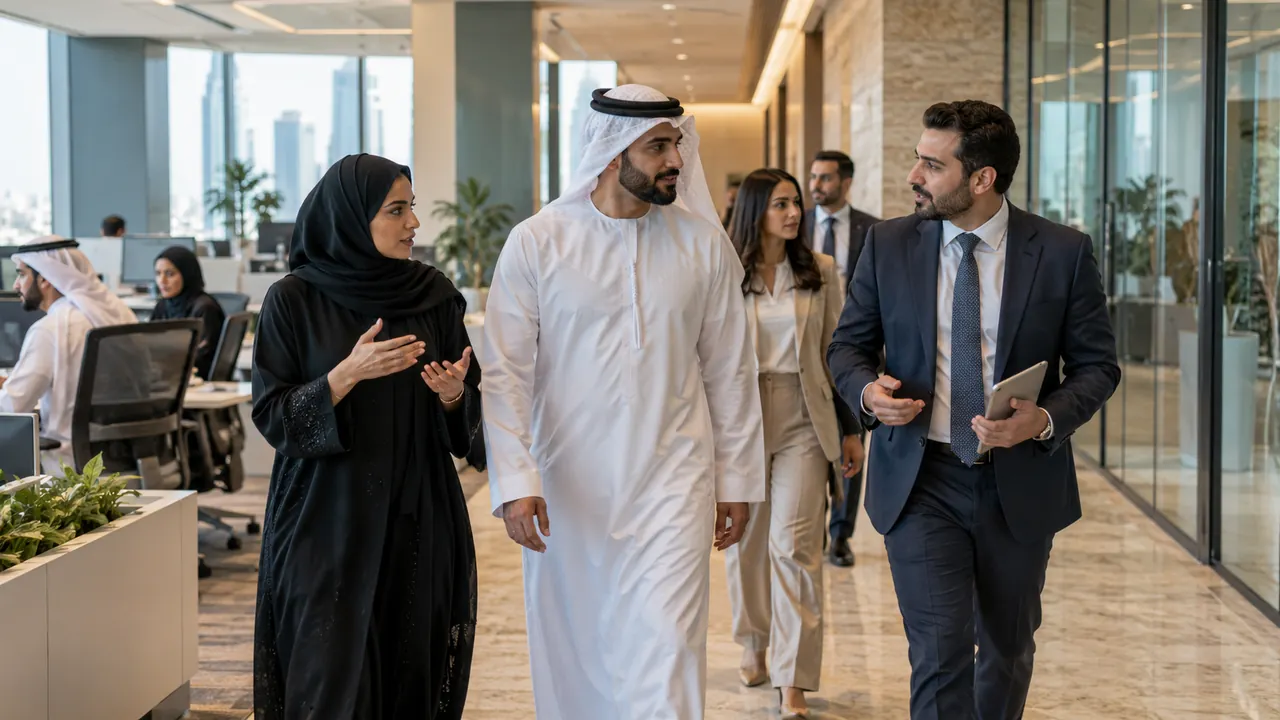
During transformation, leaders are not judged by speeches. They are judged by the habits they permit.
In periods of growth and uncertainty, every leader becomes a signal. Employees watch what is rewarded, what is ignored, who is protected, and how decisions are made when pressure rises. In Saudi Arabia this scrutiny is especially important because organisations are balancing rapid national transformation with established cultural expectations around respect, hierarchy, loyalty, and reputation.
The future of Saudi business will not be built by leaders who can only approve plans. It will require leaders who can create clarity, develop Saudi talent, manage diverse teams, handle ambiguity, challenge poor performance, and still preserve trust. That combination is not accidental. It must be assessed, developed, coached, and measured.
Our approach begins by clarifying the leadership behaviours the business actually needs. We define the transformation context, the capability gaps, the critical roles, the performance expectations, and the decisions leaders must make differently. We separate leadership language from leadership evidence. Everyone says they want agility. Fewer can describe what agility must look like in a budget meeting, a restructure, or a difficult performance conversation.
We then design development that has consequences. This may include capability assessments, leadership programmes, coaching moments, practical tools, peer sessions, and manager routines. The design is matched to the Saudi and Gulf operating environment: multicultural teams, national talent priorities, regulatory expectations, stakeholder complexity, and the pace of strategic change.
Delivery means more than running a workshop. We facilitate sessions, support action planning, equip managers, and track application back in the workplace. We help leaders practise the conversations they usually avoid: accountability, prioritisation, succession, underperformance, and cross-functional conflict. The aim is not to produce more confident vocabulary. It is to produce better leadership behaviour.
Saudi companies benefit when leaders become consistent carriers of change. Decisions become cleaner. Employees receive less contradiction. Talent sees a pathway. Transformation becomes less dependent on heroic individuals and more embedded in daily management. Leadership is not the decoration on the strategy. It is the mechanism by which strategy becomes normal.
How HR Delivery Can Help
We help leadership teams translate insight into practical HR action: diagnostic reviews, operating model design, compliance roadmaps, people capability programmes and implementation support. The goal is always clear governance, confident leaders and measurable progress.