
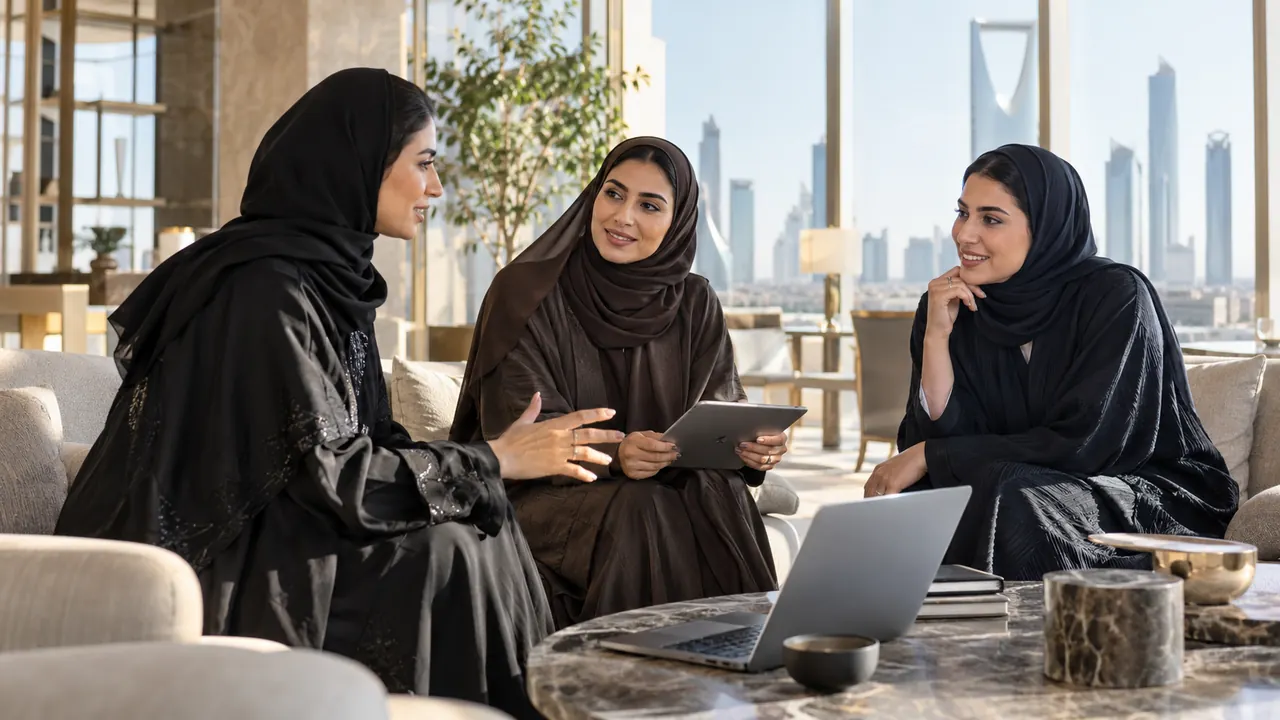
A leadership pipeline that quietly excludes capable women is not traditional. It is wasteful.
Saudi Arabia has seen a remarkable shift in women's participation in work, education and leadership. The question for companies is no longer whether women can contribute. That argument has expired. The question is whether organisations are mature enough to convert female talent into leadership readiness, succession strength and business impact.
This area matters because Saudi companies need every capable leader they can develop. Growth, innovation, customer understanding, national capability and governance all improve when leadership pipelines are broad, evidence-based and fair. Inclusion is not a slogan imported for annual reports. It is a way of refusing to squander talent.
The barriers are often subtle. Women may have access to roles but less access to sponsors. They may receive positive feedback but fewer stretch assignments. They may be visible in development programmes but absent from succession conversations. Policies may appear neutral while career realities are not. In some organisations, the leadership pipeline leaks quietly enough that nobody feels responsible.
Our approach begins by clarifying the current pipeline. Where are women represented? Where do they drop out? Which roles lead to senior leadership? Who receives critical assignments? How are promotion decisions made? What data, policies, manager behaviours and cultural assumptions shape opportunity?
We then design inclusive leadership development. This may include succession review, capability assessments, mentoring, sponsorship, leadership programmes, flexible career pathways, manager guidance, policy review and governance for promotion decisions. The design must be rooted in business need and Saudi context, not borrowed slogans.
Delivery means supporting action with evidence. We facilitate leadership discussions, run assessments, support development planning, build mentoring or sponsorship structures, brief managers and track progression. We also help organisations avoid the insult of symbolism: appointing one woman visibly while leaving the system unchanged.
The benefits for Saudi companies are stronger leadership pipelines, better retention of capable women, improved decision diversity, more credible succession and alignment with the Kingdom's direction of travel. Building women leaders is not charity. It is competence recognising competence. The organisation that cannot see half of its talent clearly should not call itself strategic.
How HR Delivery Can Help
We help leadership teams translate insight into practical HR action: diagnostic reviews, operating model design, compliance roadmaps, people capability programmes and implementation support. The goal is always clear governance, confident leaders and measurable progress.