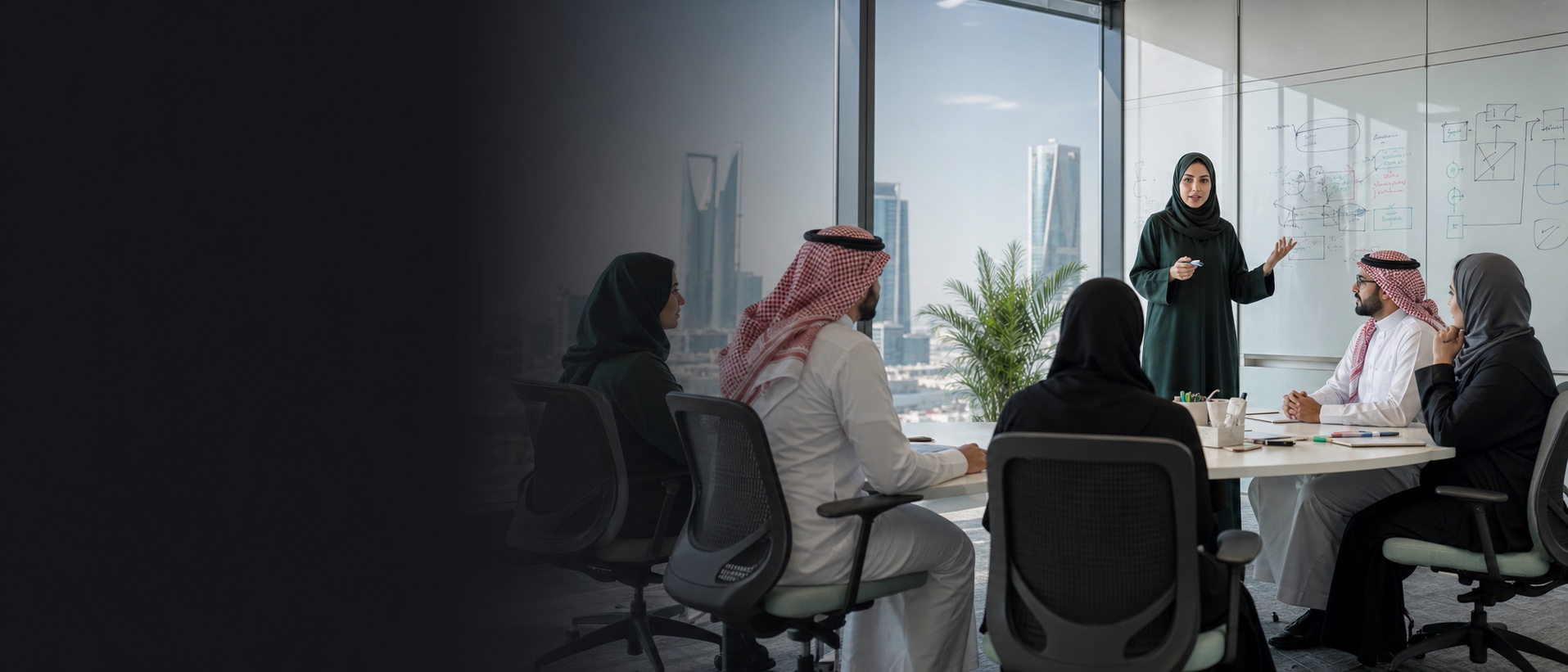

Specialists are often invited to workshops as though wisdom will emerge by seating enough experts around a table and providing strong coffee.
The modern organisation is full of expertise and strangely poor at using it. The engineer knows the constraint. The HR specialist knows the people risk. The finance lead knows the cost. The legal adviser knows the exposure. The operations manager knows what will fail on Tuesday morning. Yet somehow the final decision can still be made by people who heard all of this and absorbed very little.
Interactive SME workshops matter in Saudi Arabia because the work is increasingly cross-functional. Giga-projects, localisation, digital transformation, compliance, customer experience, restructuring and capability building do not fit neatly inside one department. Saudi companies need ways to draw out expertise, test assumptions, align stakeholders and convert knowledge into decisions. A workshop that merely allows everyone to speak is not enough. It must create an outcome.
The stakes are high because speed can become reckless and consultation can become delay. The Kingdom's pace rewards organisations that can think together without becoming trapped together. Good facilitation is therefore not a soft skill in the dismissive sense. It is a means of turning scattered intelligence into usable direction.
Our approach begins by agreeing the workshop purpose, participant group, business problem, decisions required and outputs that must be created. This step prevents the most common workshop crime: inviting people into a room without telling them what must exist when they leave it. The purpose may be to define a future process, test an operating model, diagnose a performance issue, design role accountabilities, agree capability requirements or align on implementation risks. The output must be explicit.
We then design an interactive agenda, discussion prompts, activities, tools and capture templates that keep specialists focused and productive. The design matters because experts, left entirely to themselves, may compete for airtime or retreat into detail. A good workshop gives them structure without suffocation. It asks better questions, sequences the conversation, captures evidence and forces choices.
Delivery means facilitating the workshop, drawing out expertise, aligning stakeholders and converting outputs into practical actions or decisions. This is where neutrality and challenge both matter. The facilitator must make space for quieter expertise, prevent hierarchy from silencing useful dissent, and ensure that disagreement becomes data rather than theatre. In Saudi organisations, where respect for seniority is important, facilitation must preserve dignity while still inviting truth.
For Saudi companies, the benefits are immediate. Decisions become faster because the right people are involved at the right moment. Solutions become stronger because they include operational reality. Stakeholders feel ownership because they helped create the answer. Knowledge is transferred across functions. Actions are clearer, and the organisation avoids the great waste of repeated meetings that produce only another meeting. In a transforming economy, the ability to think together well is a serious business capability.
How HR Delivery Can Help
We help leadership teams translate insight into practical HR action: diagnostic reviews, operating model design, compliance roadmaps, people capability programmes and implementation support. The goal is always clear governance, confident leaders and measurable progress.