

230 pages / PDF
Developing Managers Toolkit / broader companion
The D3 edition covers continuing management development beyond the first-line transition.
View PDFD8 / Talent development
Make a credible start in a first-line management role. This 104-tool practitioner suite helps you agree your mandate, understand the work, set useful standards, support people and review what changed across the first 100 days.
D8 / First-Line Managers First 100 Days Toolkit
Use the three domains of the Management Development Framework to balance productivity, people and performance. The first-100-days rhythm is a flexible learning route; urgent matters follow the right process immediately.
For new first-line managers, their sponsors, HR partners, mentors and management-development programme owners.
Your working library
Explore the complete toolkit, then use the supporting document alongside the guides and examples.


Complete practitioner toolkit
The 230-page edition contains 104 distinct procedures, matching records and an eight-page illustrative case. It shows how to separate a person's practice from process, authority and capacity constraints.
Open the complete toolkit112 pages / PDF
112 pages of reusable records, one matched to each numbered procedure. Keep sensitive employee material in authorised systems and preserve the evidence behind each decision.
View supporting document230 pages / PDF
The D3 edition covers continuing management development beyond the first-line transition.
View PDFPDF resources are in English. Read on screen: Actual view on desktop and full width on mobile.
The thinking behind the tools
The approved Management Development Framework connects Productivity, People and Performance Management. The D8 book adds an illustrative sequence from pre-start through day 100. Its timing does not replace local policy or a manager's judgement.
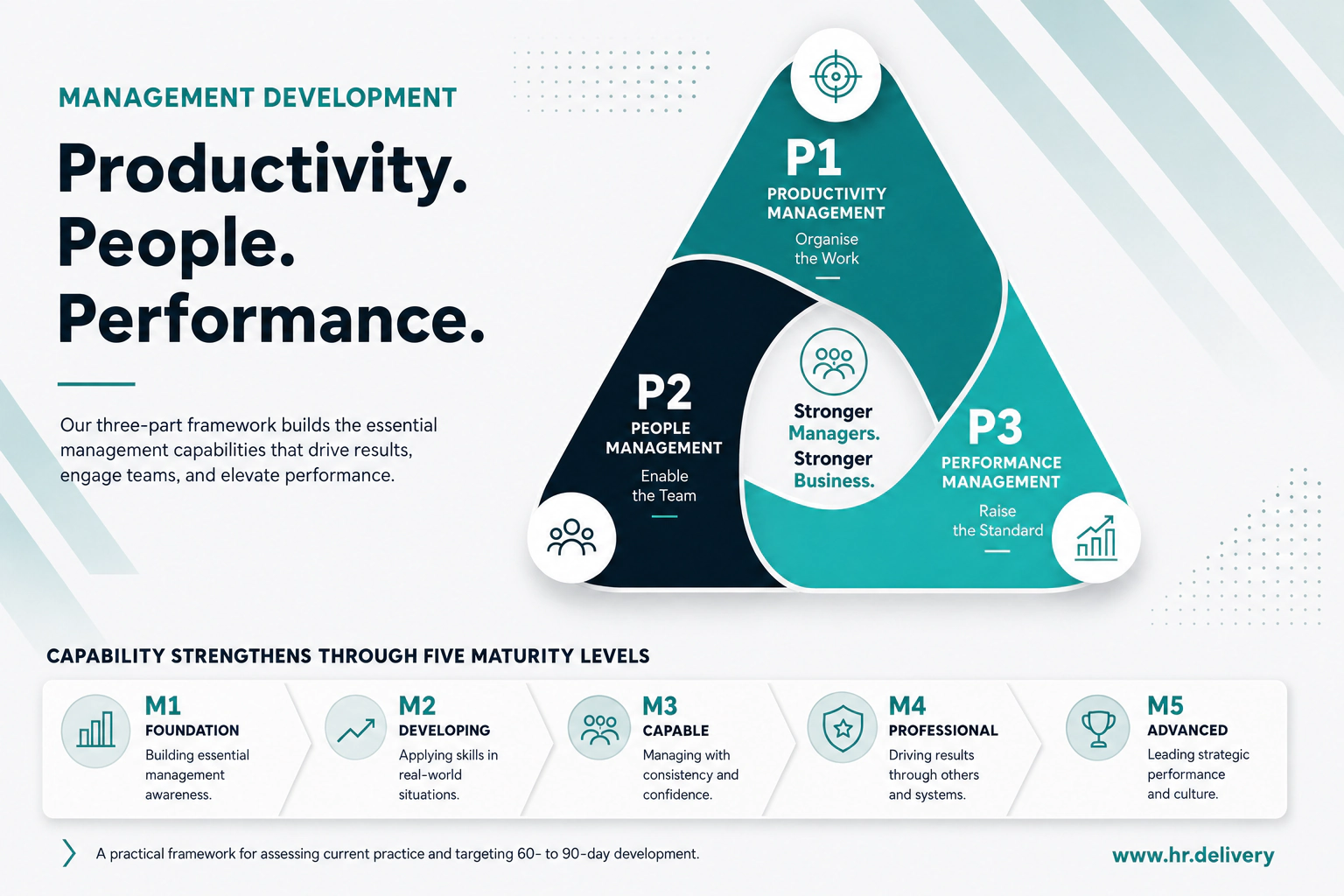
The framework's maturity stages are separate from the 100-day sequence. A first period should not be turned into an automatic management score. The five toolkit dividers organise use; they do not rename the source model.
Explore the interactive frameworkRead & diagnose
The 82-page D8 book provides the full chronological reading route, two worked cases, fourteen weekly reflections and twelve source records. The D3 management toolkit is a broader companion. No dedicated D8 diagnostic manual is published.

Ebook
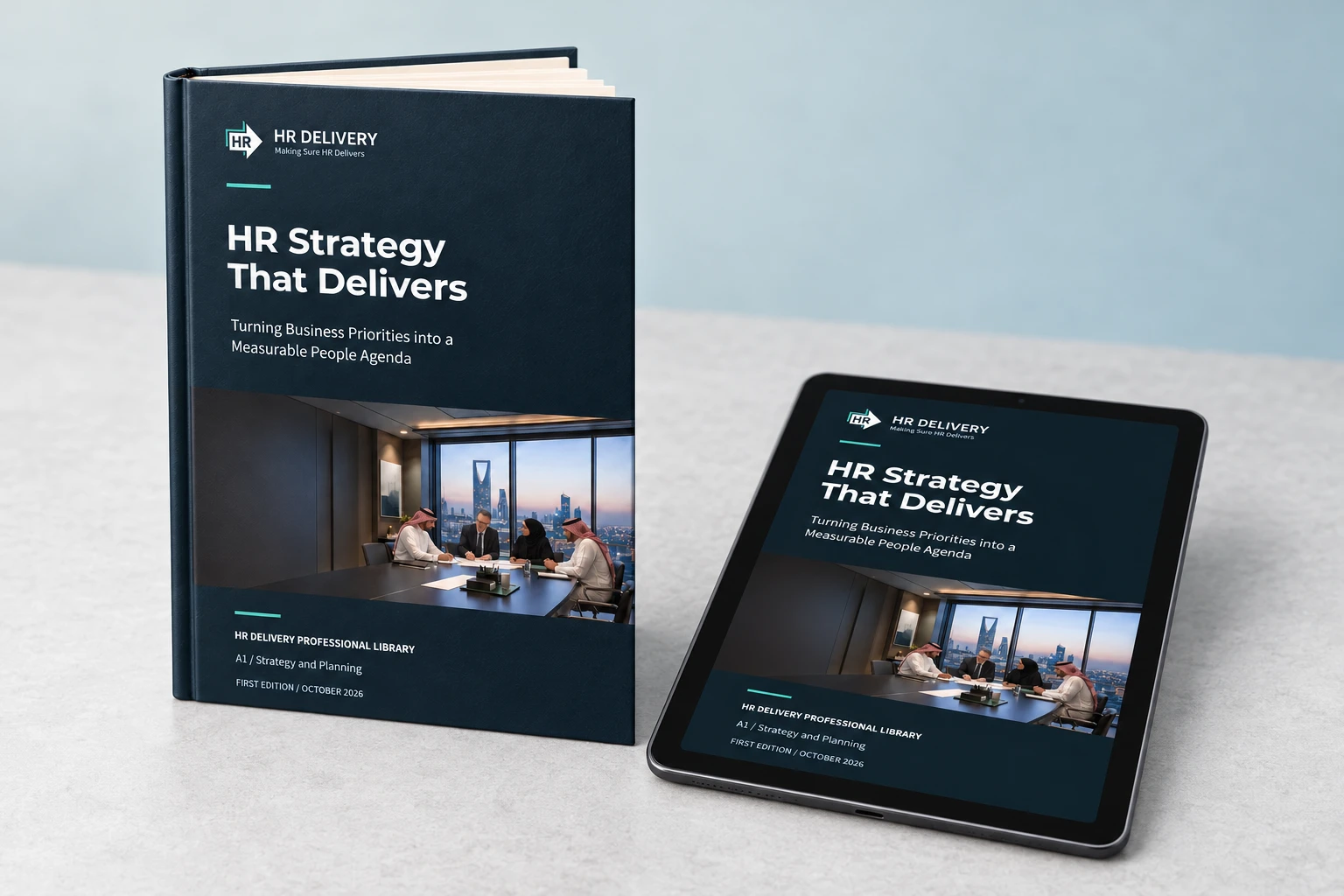
An 82-page guide to the transition, with two cases, weekly reflection and twelve records.
View PDF

Diagnostic manual
A 95-page organisational-system diagnostic. Use it to examine expectations and feedback conditions, never to score a new manager.
View PDFShort insights
Related assessments
Related management assessments keep their own constructs and qualified interpretations; none automatically scores a manager's first 100 days.
MMAC, MSJ and 5D16F may inform development when administration and interpretation are authorised.
Browse this assessment groupLearn & apply
Explore a focused one-day introduction or build wider professional capability through a related development programme.
A practical starting point
Confirm the mandate, authority, handover and immediate risks before promising change.
Listen across shifts, trace cases and test explanations against capacity and process evidence.
Set standards, delegate with support, give specific feedback and run bounded improvement tests.
Compare speed, quality, workload and subgroup effects, then agree the next-quarter plan.
Work with HR Delivery to turn the evidence and tools into a response suited to your organisation.
Continue the connection