


Start with the method
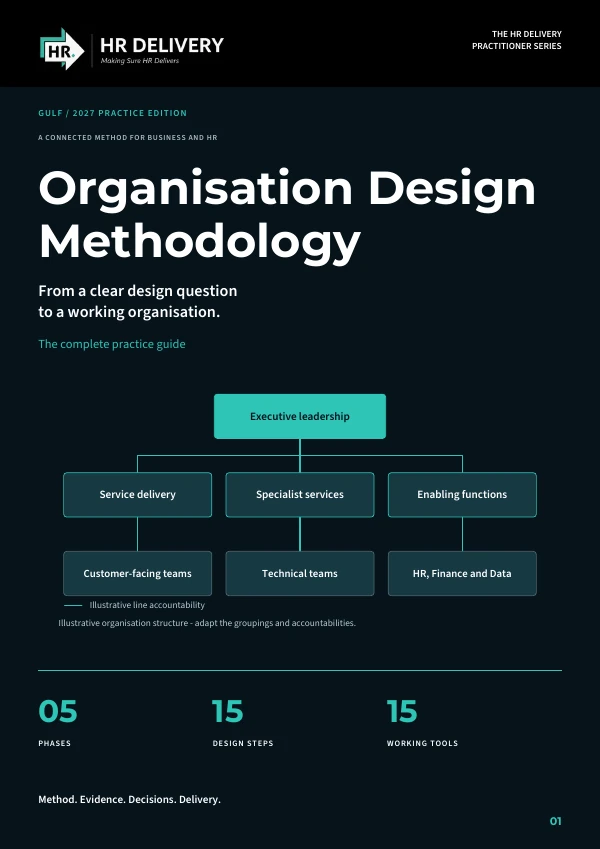
Organisation Design Methodology
The clear route through five stages and fifteen connected decisions, with practical activities, expected outputs, worked applications and a worksheet for each step.
Read the documentTHE WHOLE METHOD
Start with the methodology, deepen the work with the practice book, apply the Gulf context, and connect human and AI work. Four complementary perspectives support the same five stages and fifteen steps.
Start with the method
The clear route through five stages and fifteen connected decisions, with practical activities, expected outputs, worked applications and a worksheet for each step.
Read the document
Deepen the practice
Detailed explanations, diagrams, cases and working records organised around the fifteen steps. Use it to investigate the decision in front of you and keep evidence, authority, people and delivery connected.
Read the document
Apply the Gulf context
A visual field guide to the method, practical tools and six country lenses. Connect design choices to the actual employer, service, workforce and decision authority, then test the result locally.
Read the document
Design human and AI work
The wider practitioner reference for organisation theory, leadership, culture, operating models and responsible AI. Teaching cases, country playbooks and fifteen templates connect new technology to human accountability and measurable results.
Read the documentThe methodology sets the route; the practice book shows how to do the work. Use the handbook to test local fit and the AI reference whenever technology changes work, decisions or accountability. Return to each book as the evidence develops.
Agree the assignment and translate strategy into design requirements.
Understand current work, test evidence and define principles and capabilities.
Connect the operating model, structure, measures and human–AI responsibilities.
Bring transition, impacts, costs and detailed roles into an agreed proposal.
Plan implementation, support the transition, evaluate results and improve.
DISCOVER · DIAGNOSE · DESIGN · ALIGN · DELIVER
See all fifteen steps at a glance. Select a stage, then choose steps and guides, input documents, tools and portals, or outcome documents.
Work with the evidence. Revisit an earlier stage when assumptions, priorities or the operating context change.
THE COMPLETE NAMARIS CASE STUDY
Start with a summary, explore the complete case records, or choose an individual step below. Namaris is a fictional case study.
STAGE 1 / Discover
Commission the work, clarify the strategic purpose and involve the people who can define a credible mandate. Agree scope, decision authority and evidence questions before changing the chart.
An agreed mandate, scope, strategic purpose and evidence plan.
Commission the work, clarify the strategic purpose and involve the people who can define a credible mandate. Agree scope, decision authority and evidence questions before changing the chart.
Read the document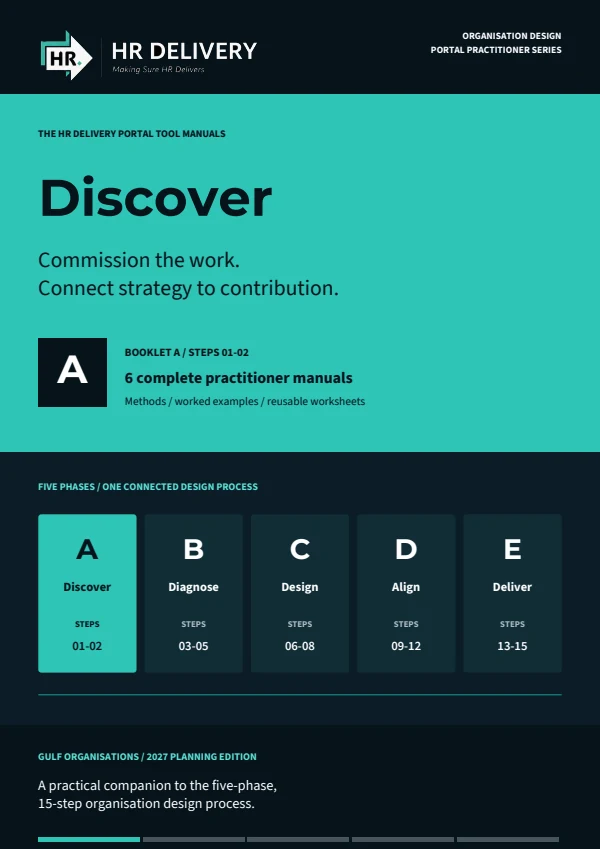
Practical manuals for the HR Delivery portals used in Discover, with methods, worked examples and reusable worksheets.
Read the documentPrepare for each step: use its input document to identify the information and evidence to gather before doing the work.
STEP 01
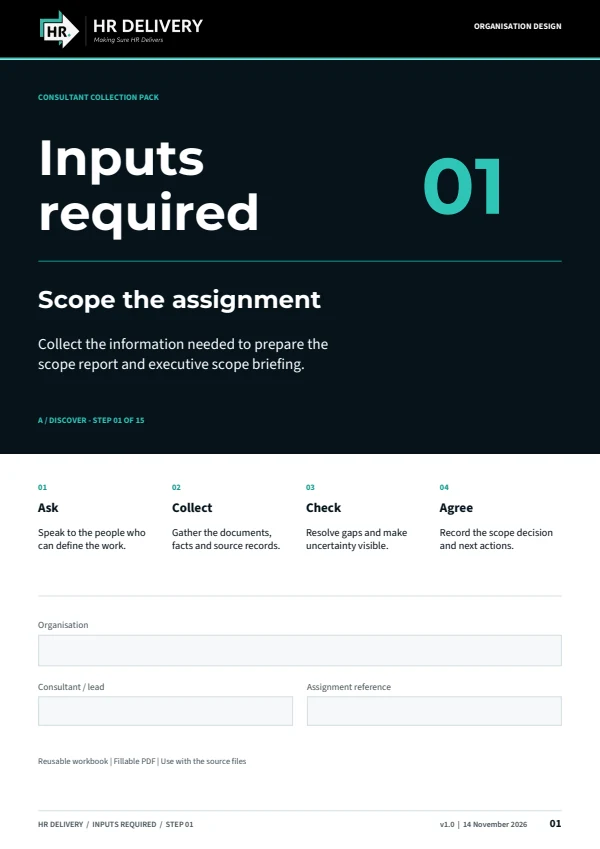
Collect the information needed to prepare the scope report and executive scope briefing.
Read input document
STEP 02
Collect the information needed to prepare the Strategy Mirror report and executive briefing.
Read input documentResources for agreeing the assignment and translating strategic priorities into required contributions. Choose the tools your assignment needs; existing portal access still applies.
The reports that capture the work completed in this stage.
STEP 01 · Discover
Agree the purpose, boundaries, responsibilities and decisions that will guide the assignment.
English · View only
Namaris · fictional case
STEP 02 · Discover
Translate strategic intent into a clear set of organisation design requirements.
English · View only
Namaris · fictional case
Reading links activate as files are uploaded.
STAGE 2 / Diagnose
Establish a current-performance baseline, investigate how work and authority operate, agree design principles and define the capabilities the future organisation needs.
An evidence-based account of the work, the problems and the design requirements.
Establish a current-performance baseline, investigate how work and authority operate, agree design principles and define the capabilities the future organisation needs.
Read the document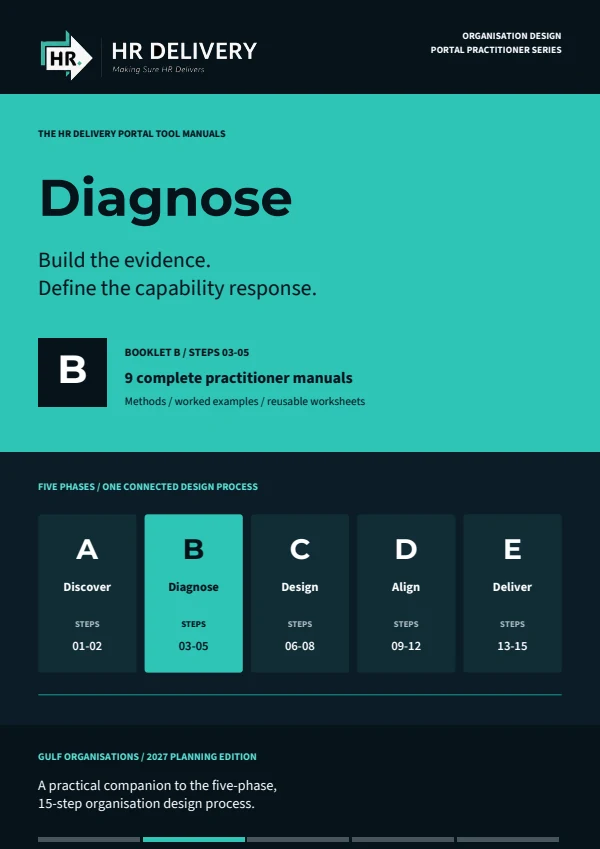
Practical manuals for the HR Delivery portals used in Diagnose, with methods, worked examples and reusable worksheets.
Read the documentPrepare for each step: use its input document to identify the information and evidence to gather before doing the work.
STEP 03
Collect the evidence needed to prepare the current organisation report and executive briefing.
Read input document
STEP 04
Collect the evidence and decisions needed for the principles report and executive briefing.
Read input document
STEP 05
Collect the work requirements and evidence needed for the capability report and briefing.
Read input documentResources for the current-state evidence, agreed design principles and future capability map. Choose the tools your assignment needs; existing portal access still applies.
The reports that capture the work completed in this stage.
STEP 03 · Diagnose
Bring together the evidence on the current organisation, its performance and its design challenges.
English · View only
Namaris · fictional case
STEP 04 · Diagnose
Record the agreed guiding principles and explain the evidence and rationale for selecting them.
English · View only
Namaris · fictional case
STEP 05 · Diagnose
Show the capabilities the future organisation needs and where they must be developed.
English · View only
Namaris · fictional case
Reading links activate as files are uploaded.
STAGE 3 / Design
Develop operating-model and structural alternatives, clarify accountabilities and test how work will connect. Define the measures and rules that make each option workable.
Configured structural options, roles, accountabilities and an explicit comparison.
Develop operating-model and structural alternatives, clarify accountabilities and test how work will connect. Define the measures and rules that make each option workable.
Read the document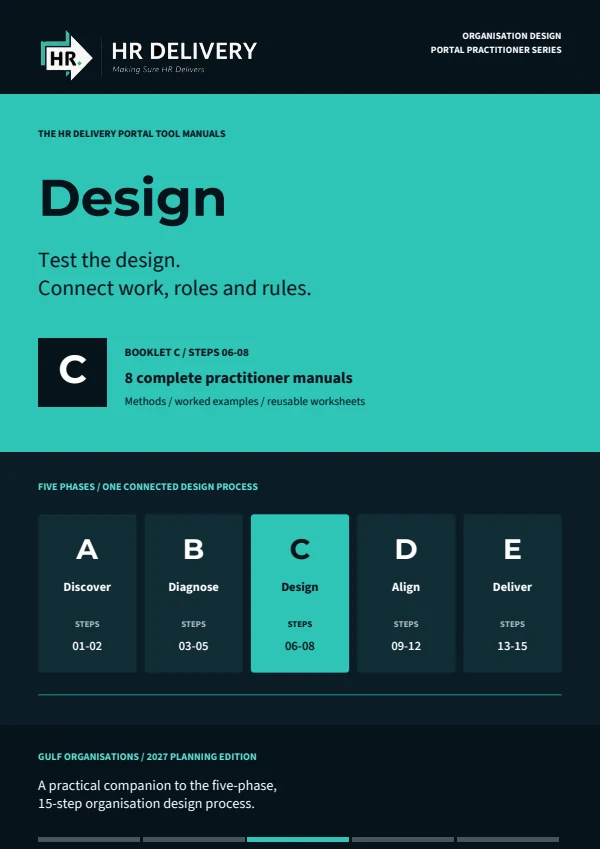
Practical manuals for the HR Delivery portals used in Design, with methods, worked examples and reusable worksheets.
Read the documentPrepare for each step: use its input document to identify the information and evidence to gather before doing the work.
STEP 06
Collect the choices, work records and evidence needed to define how the organisation will operate.
Read input document
STEP 07
Collect the work, reporting and comparison evidence needed to choose a credible structural direction.
Read input document
STEP 08
Collect the definitions, responsibilities and evidence needed to manage and test the proposed design.
Read input documentResources for developing the operating model, comparing structural options and defining measures and rules. Choose the tools your assignment needs; existing portal access still applies.
The reports that capture the work completed in this stage.
STEP 06 · Design
Describe how the future operating model will connect work, people, decisions and delivery.
English · View only
Namaris · fictional case
STEP 07 · Design
Compare the high-level structural options and explain the recommended design.
English · View only
Namaris · fictional case
STEP 08 · Design
Set out the agreed measures, decision rules and working boundaries for the design.
English · View only
Namaris · fictional case
Reading links activate as files are uploaded.
STAGE 4 / Align
Choose the transition approach, assess impacts and build an evidenced business case. Complete the roles, authority, workforce and employment arrangements needed for approval.
An agreed choice, business case, decision record and implementation commitment.
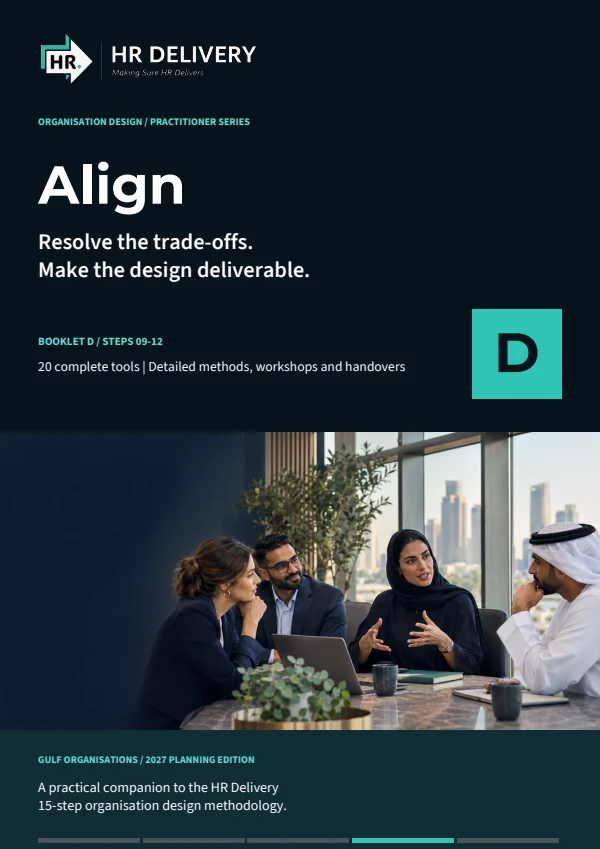
Choose the transition approach, assess impacts and build an evidenced business case. Complete the roles, authority, workforce and employment arrangements needed for approval.
Read the document
Practical manuals for the HR Delivery portals used in Align, with methods, worked examples and reusable worksheets.
Read the documentPrepare for each step: use its input document to identify the information and evidence to gather before doing the work.
STEP 09
Collect the evidence for a workable move from the current organisation to the new design.
Read input document
STEP 10
Understand what the design will mean for people, work, services and the business.
Read input document
STEP 11
Collect the evidence for a clear investment decision before implementation.
Read input document
STEP 12
Collect the work, role, grade and cost evidence.
Read input documentResources for the transition map, impact assessment, business case and detailed organisation design. Choose the tools your assignment needs; existing portal access still applies.
The reports that capture the work completed in this stage.
STEP 09 · Align
Map the route from the current organisation to the agreed future design.
English · View only
Namaris · fictional case
STEP 10 · Align
Make the expected people, operational and organisational impacts visible for review.
English · View only
Namaris · fictional case
STEP 11 · Align
Bring the evidence, value, costs, risks and recommendations together for implementation approval.
English · View only
Namaris · fictional case
STEP 12 · Align
Set out the detailed organisation, roles, grades and agreed headcount requirements.
Reading links activate as files are uploaded.
STAGE 5 / Deliver
Plan implementation, prove readiness and manage the transition. Compare outcomes with the baseline and business case, resolve gaps and assign ongoing ownership.
A managed transition, operating measures and a practical review of the design.
Plan implementation, prove readiness and manage the transition. Compare outcomes with the baseline and business case, resolve gaps and assign ongoing ownership.
Read the document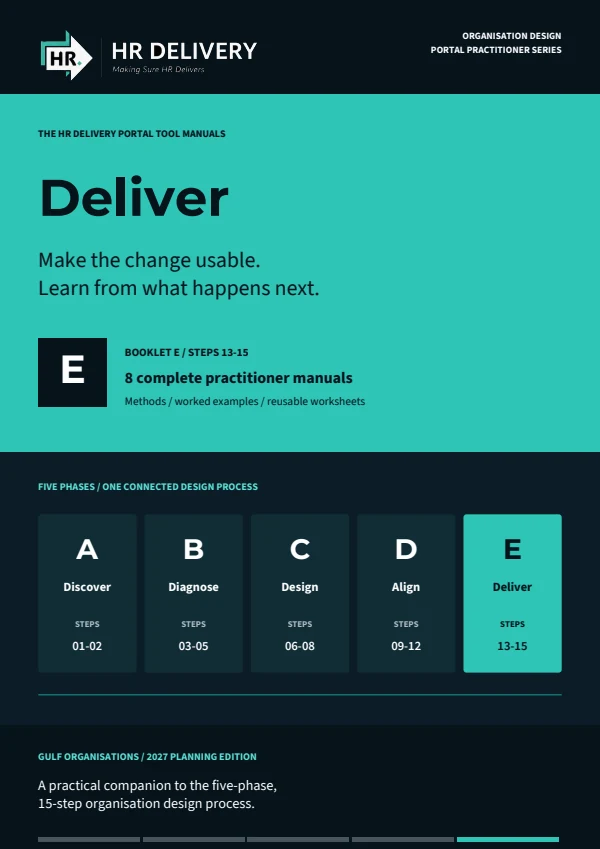
Practical manuals for the HR Delivery portals used in Deliver, with methods, worked examples and reusable worksheets.
Read the documentPrepare for each step: use its input document to identify the information and evidence to gather before doing the work.
STEP 13
Collect the facts, resources, decisions and release checks.
Read input document
STEP 14
Collect the evidence for clear answers and practical help.
Read input document
STEP 15
Collect the evidence. Review the results. Agree the next action.
Read input documentResources for implementing the approved design, supporting the transition and checking the results. Choose the tools your assignment needs; existing portal access still applies.
Choose a Gulf country and follow six stages with 18 practical steps, supporting tools and country templates.
The reports that capture the work completed in this stage.
STEP 13 · Deliver
Sequence the implementation activities, responsibilities, milestones and readiness checks.
STEP 14 · Deliver
Set out the communication, engagement and practical support needed during the transition.
English · View only
Namaris · fictional case
STEP 15 · Deliver
Review how the new design is embedding, evaluate results and agree the actions required.
Reading links activate as files are uploaded.
SET THE DESIGN CRITERIA
Use the guiding-principles book and the diagnostic together. Examine current pressures and future exposure, review the supporting evidence, then agree a human-reviewed shortlist of principles for your design.
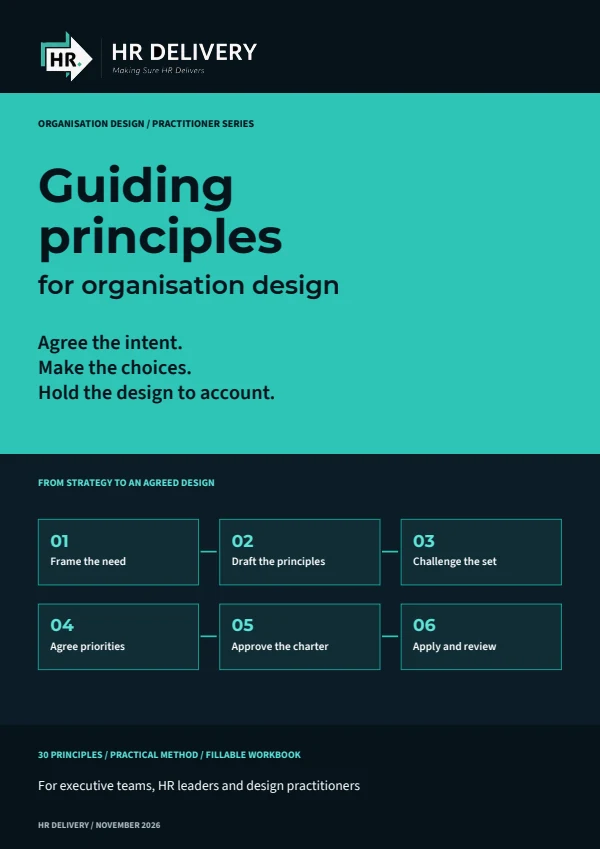
THE PRACTITIONER GUIDE
Explore 30 principles and a practical six-part method: frame the need, draft principles, challenge the set, agree priorities, approve the charter, and apply and review.
GUIDING PRINCIPLES DIAGNOSTIC
Work through 60 anchored questions across 30 principles. Compare current pressure and future exposure, inspect ties and sensitivity, and record your professional judgement.
Pilot decision support. It is not a validated assessment or an automatic design recommendation. The supplied diagnostic model is in English.
Open the diagnostic ↗EXPLORE BEFORE YOU CHOOSE
Explore how each pattern groups work, assigns authority and creates trade-offs. Compare up to four designs side by side; build a shortlist to investigate, then test configured options in the appraisal tool.
Add 2–4 structures to comparison, then open your view-only structural options report. Includes a table covering ten criteria, strengths, complexities, unsuitable conditions and source references. The report follows the English booklets.
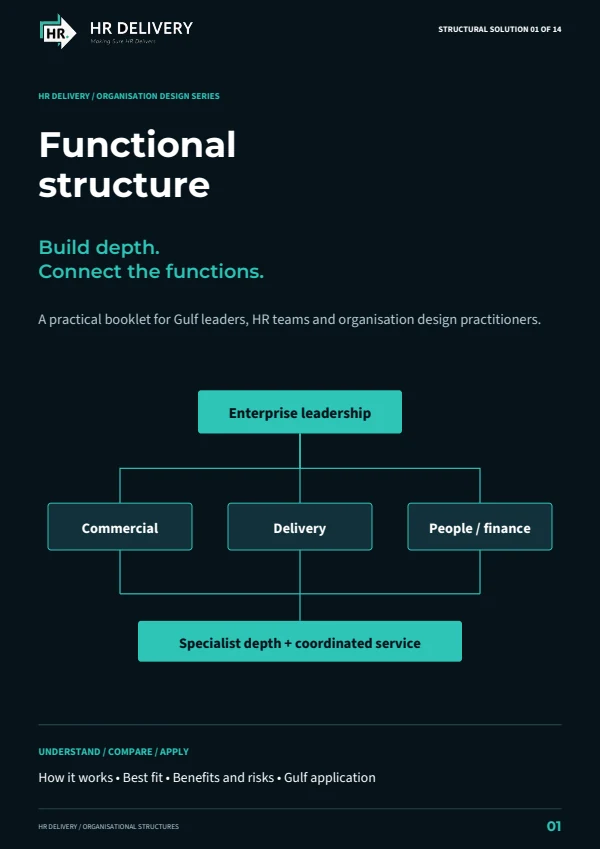
STRUCTURAL PATTERN 01 / 14
Professional function or discipline, such as operations, commercial, people and finance.
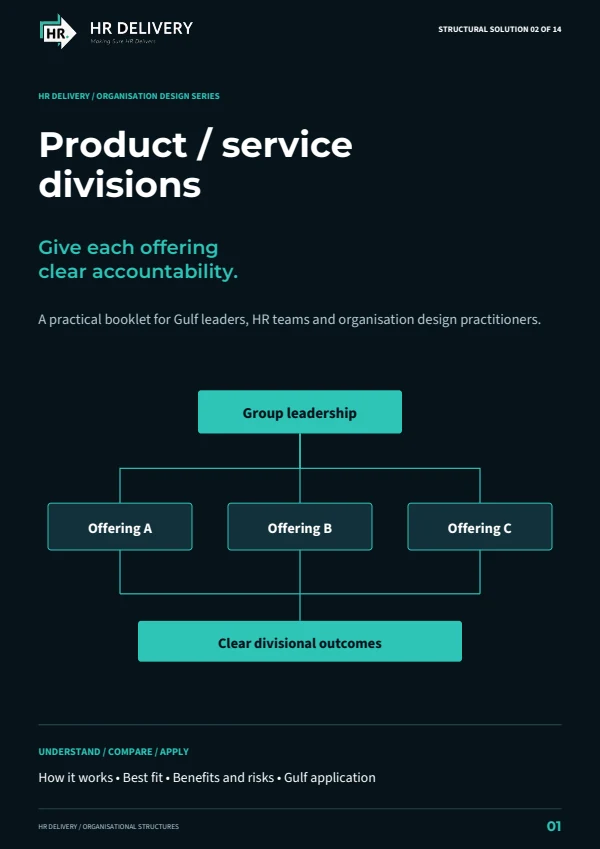
STRUCTURAL PATTERN 02 / 14
Distinct products or services with different economics, workflows or customer promises.
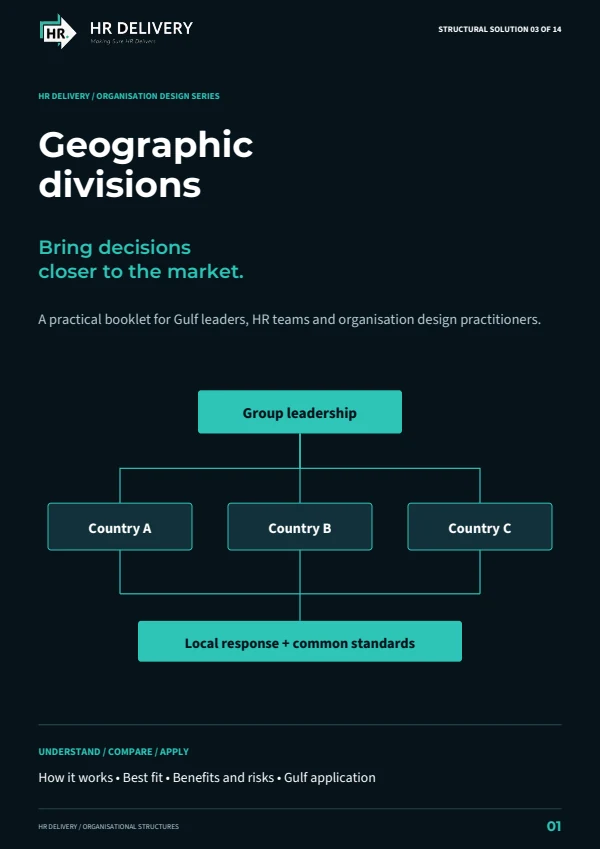
STRUCTURAL PATTERN 03 / 14
Territory, country or region where local conditions materially affect delivery.
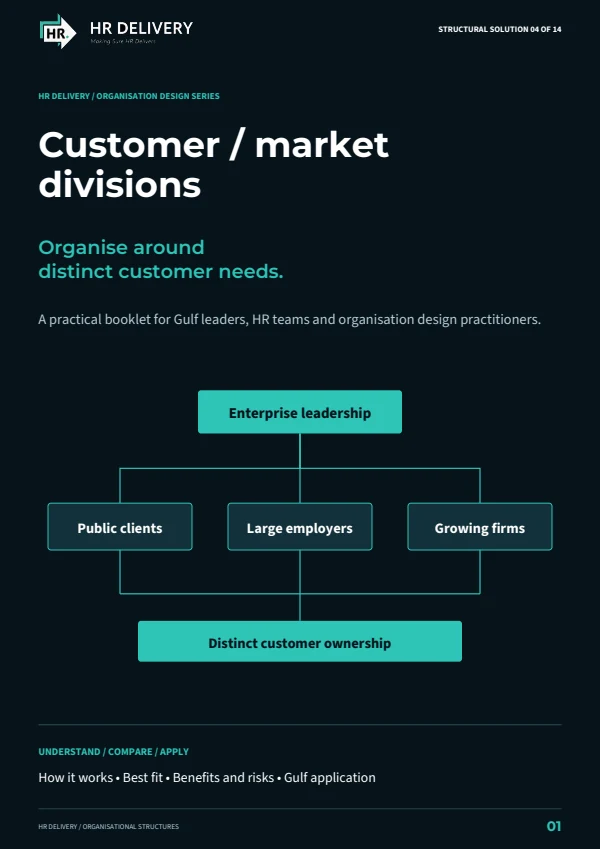
STRUCTURAL PATTERN 04 / 14
Customer segments or markets distinguished by substantive needs and service journeys.
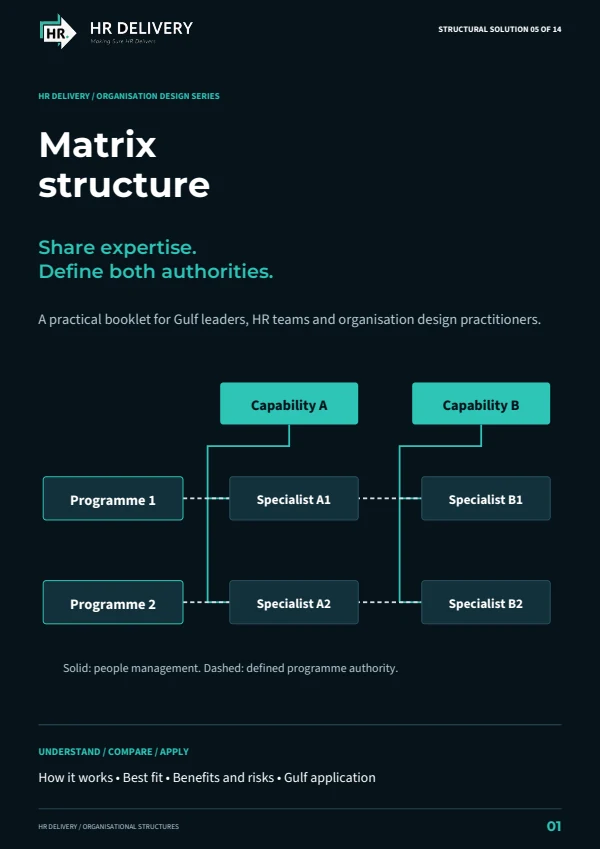
STRUCTURAL PATTERN 05 / 14
Two simultaneous organising dimensions with explicitly divided authority.
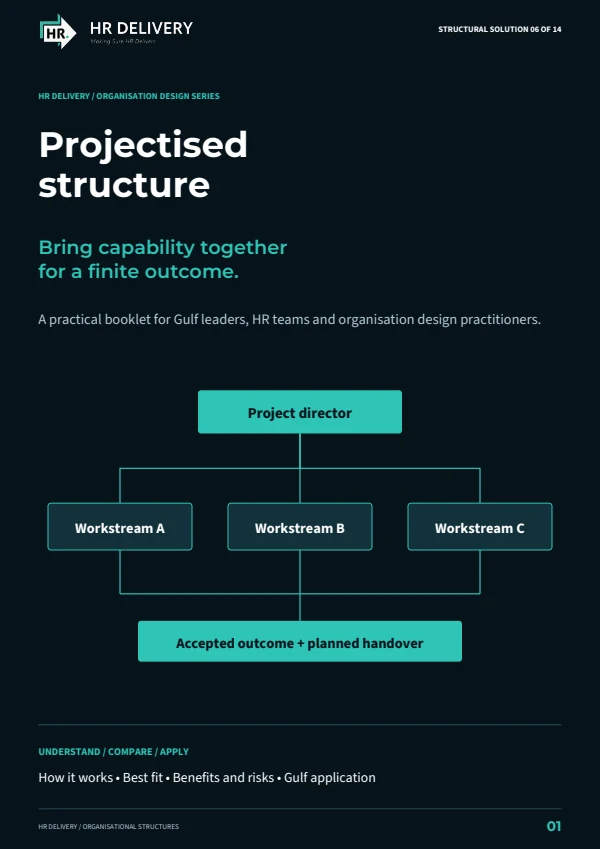
STRUCTURAL PATTERN 06 / 14
A defined project outcome with a start, end and acceptance conditions.
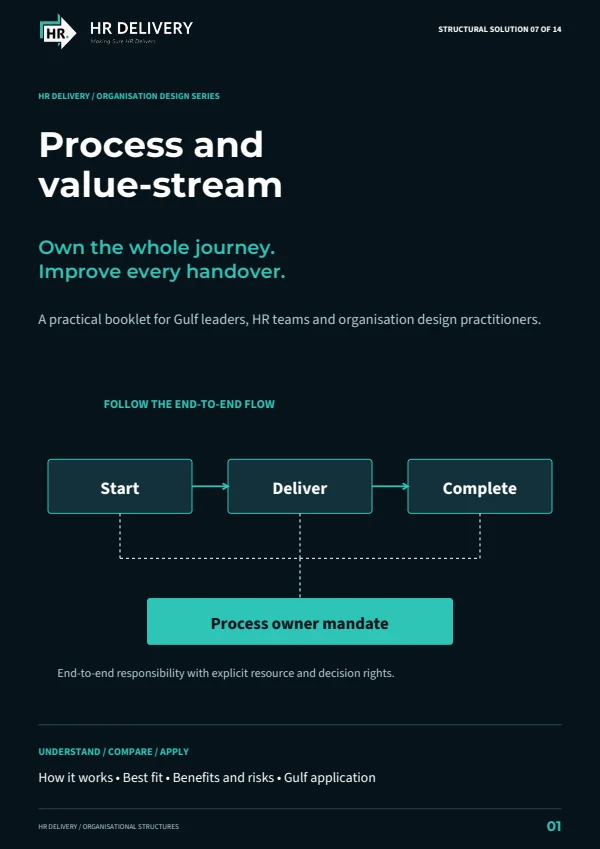
STRUCTURAL PATTERN 07 / 14
End-to-end process or value stream with an identifiable recipient and outcome.
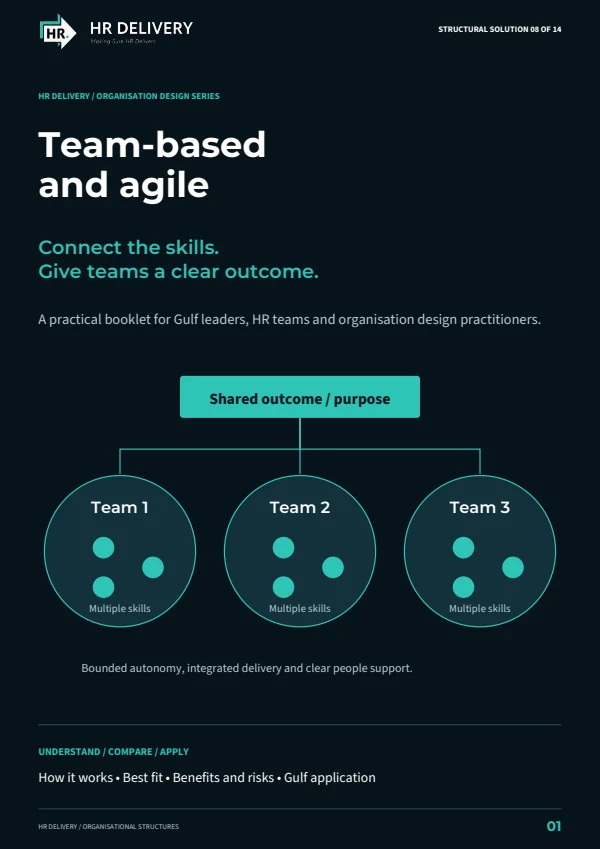
STRUCTURAL PATTERN 08 / 14
Persistent product, service or outcome teams with complementary capabilities.
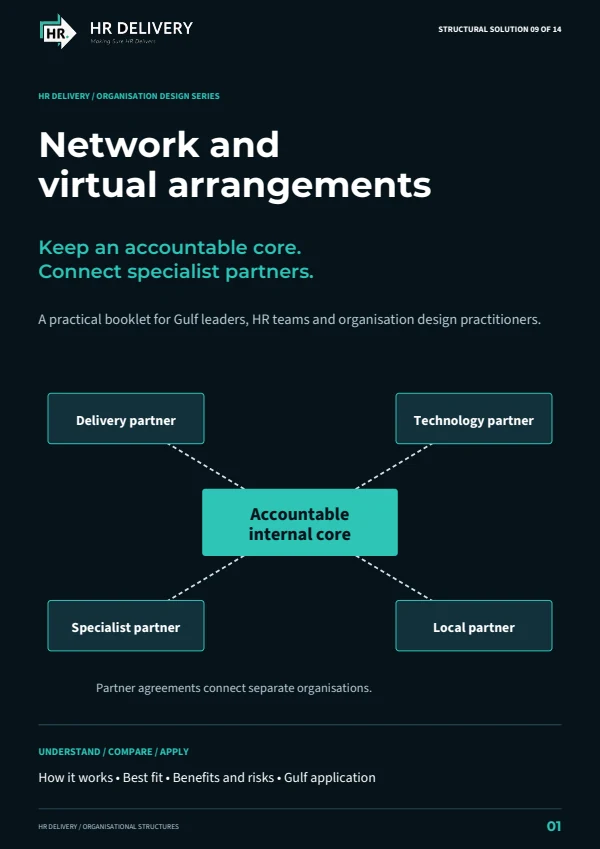
STRUCTURAL PATTERN 09 / 14
Connected capabilities across organisational boundaries; virtual working separately describes dispersion and digital coordination.
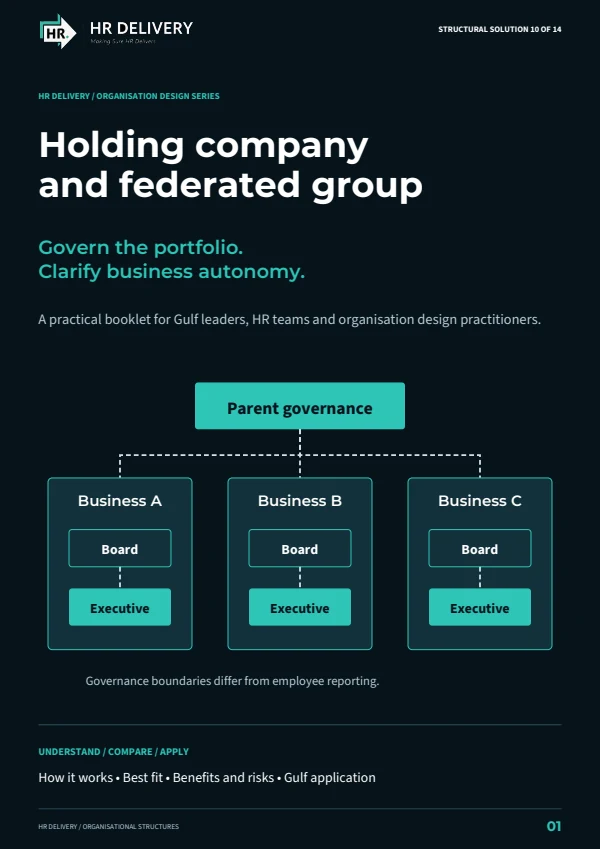
STRUCTURAL PATTERN 10 / 14
Operating businesses with separately defined governance and management responsibilities.
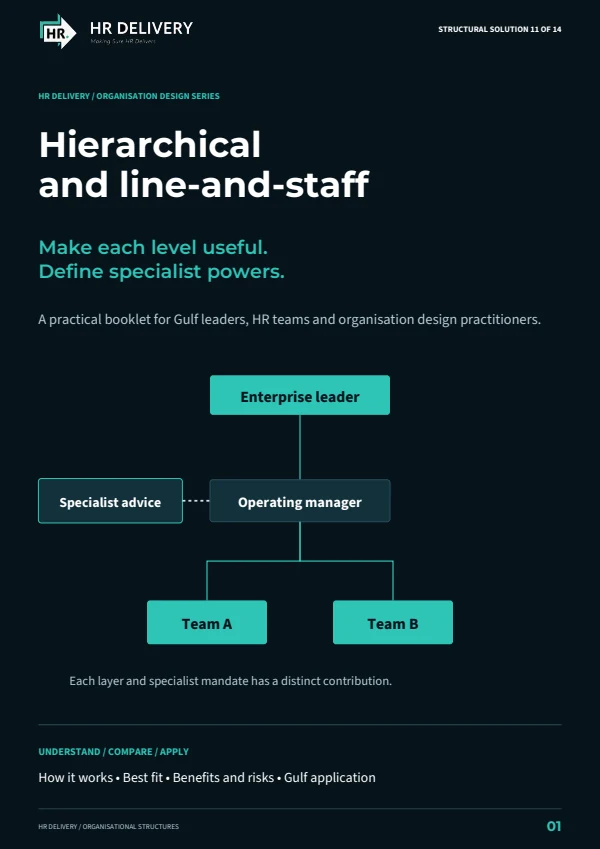
STRUCTURAL PATTERN 11 / 14
A reporting hierarchy combined with distinct specialist support or control roles.
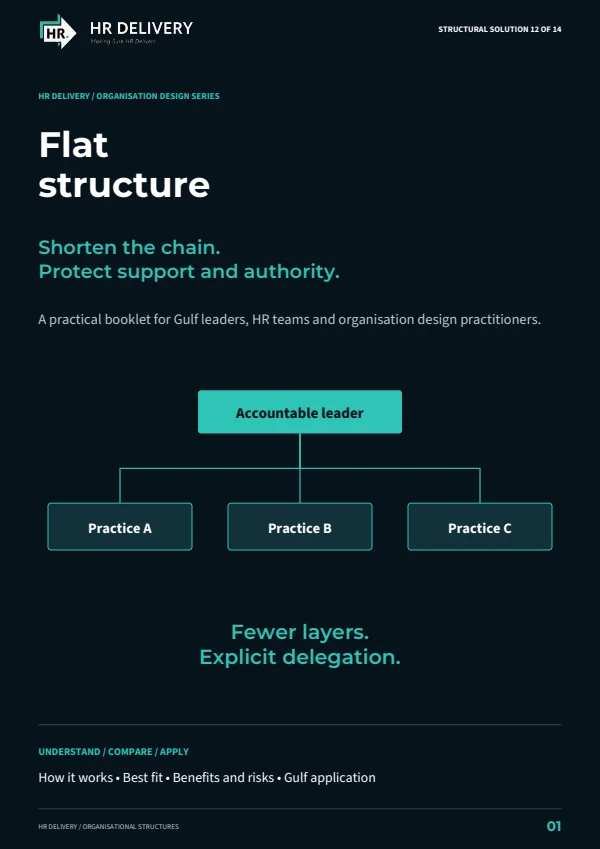
STRUCTURAL PATTERN 12 / 14
A reduced number of management layers applied to an explicitly identified grouping logic.
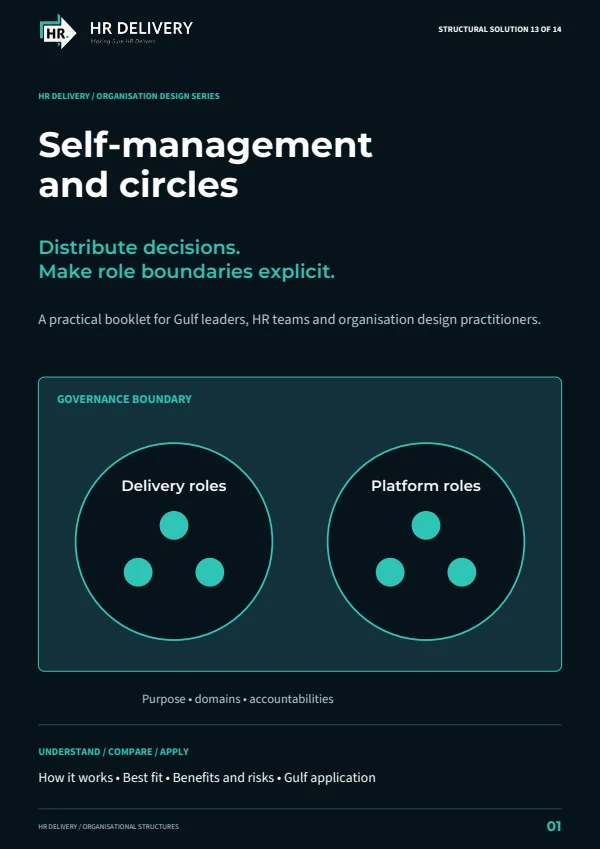
STRUCTURAL PATTERN 13 / 14
Role domains and circles with documented purposes, accountabilities and interfaces.
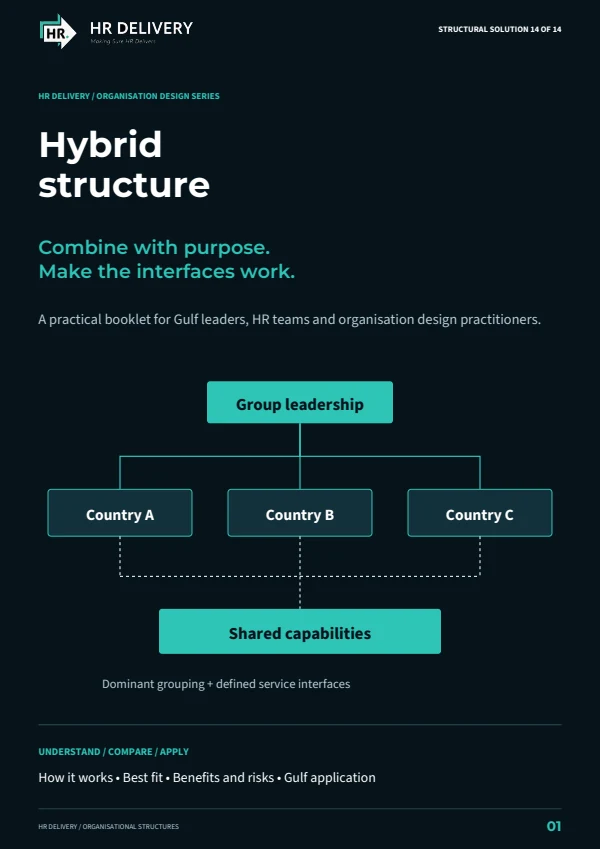
STRUCTURAL PATTERN 14 / 14
A named dominant grouping logic with explicitly justified additional structural components.
MAKE THE TRADE-OFFS VISIBLE
Compare configured structural options against agreed principles. Make the evidence, weights, mandatory gates and uncertainties visible before a decision is approved.
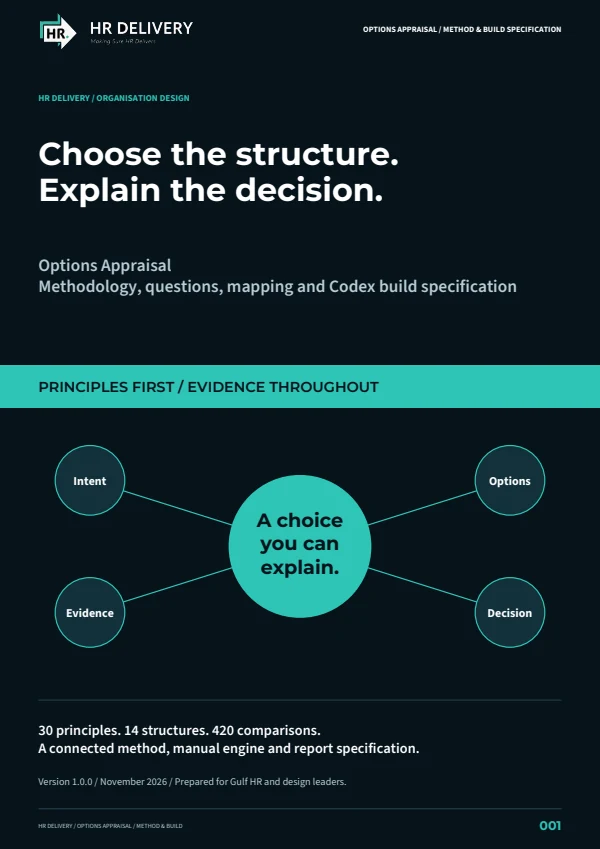
A principles-first method for comparing 14 structures against 30 principles, with 420 comparisons, questions, mapping, a manual engine and report specification.
Read the documentOPTIONS APPRAISAL WORKSPACE
Set 6–10 principles and 2–6 options. Define anchors, weigh the trade-offs, check six mandatory gates and examine sensitivity. The tool uses the supplied appraisal method and conditional mappings.
Open options appraisal ↗View the worked example reportTEST WHAT WILL HAPPEN IN PRACTICE
Test the proposed organisation before committing to it. Use the complete guide to examine how work, decisions, accountabilities, capacity and coordination will operate under real conditions.
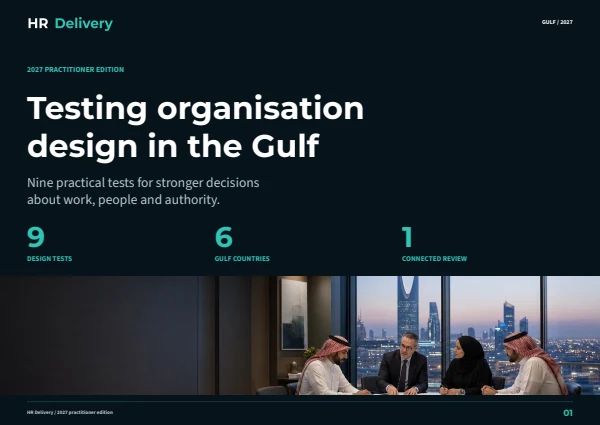
Apply nine practical design tests to decisions about work, people and authority, with application across the six Gulf countries and a connected review process.
Read the documentSTRUCTURE IN PRACTICE
Read a researched companion for every structural pattern. Use the organisations as cases to examine, with their stated sources and context; each case illustrates a particular design lens rather than a structure to copy unchanged.
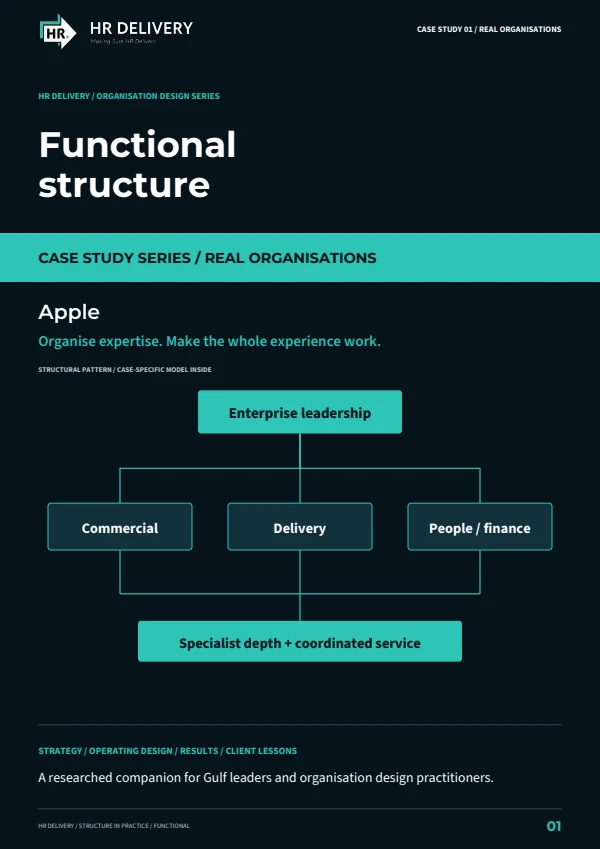
CASE STUDY 01 / 14
Functional
Examine Apple through the functional pattern: strategy, operating design, results and lessons for Gulf practitioners. A case-specific model and source evidence support comparison rather than copying a structure wholesale.
CASE STUDY 02 / 14
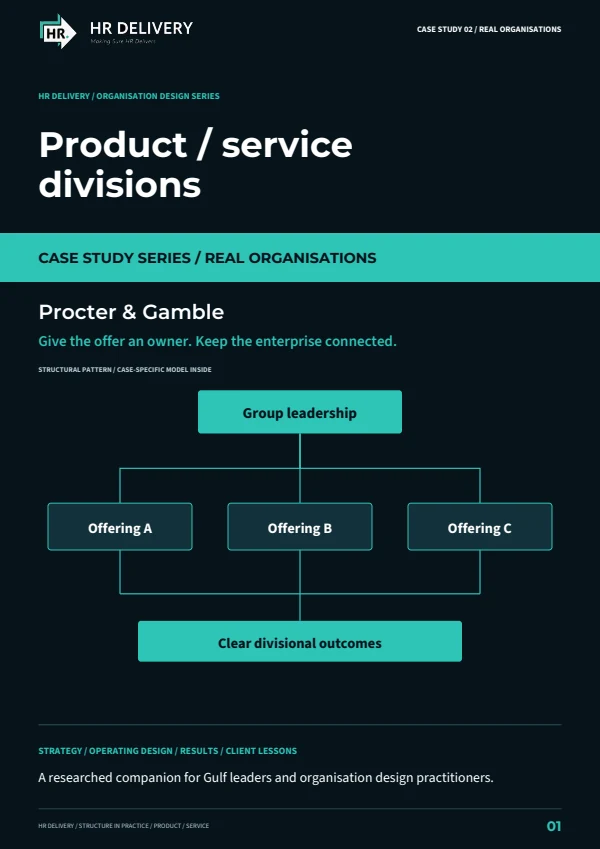
Product / service divisions
Examine Procter & Gamble through the product and service divisions pattern: strategy, operating design, results and lessons for Gulf practitioners. A case-specific model and source evidence support comparison rather than copying a structure wholesale.
CASE STUDY 03 / 14
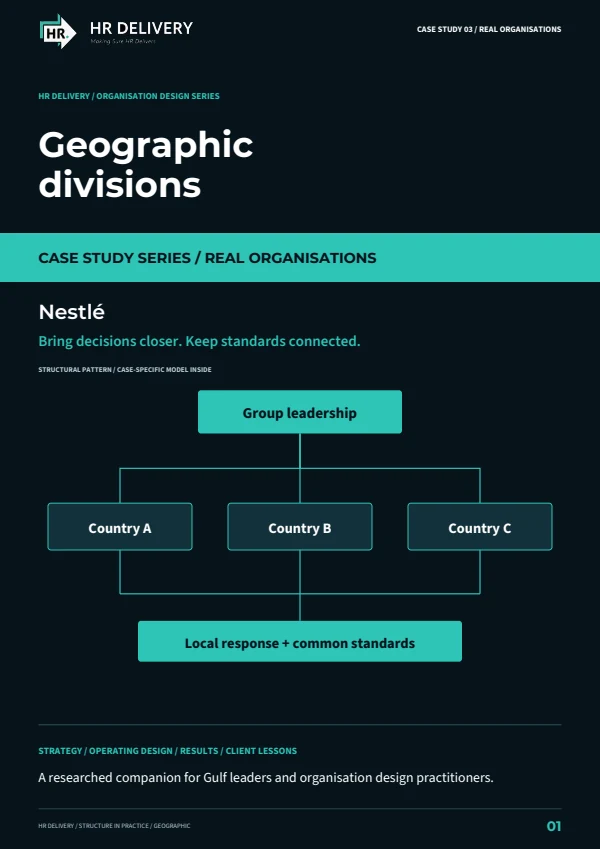
Geographic divisions
Examine Nestlé through the geographic divisions pattern: strategy, operating design, results and lessons for Gulf practitioners. A case-specific model and source evidence support comparison rather than copying a structure wholesale.
CASE STUDY 04 / 14
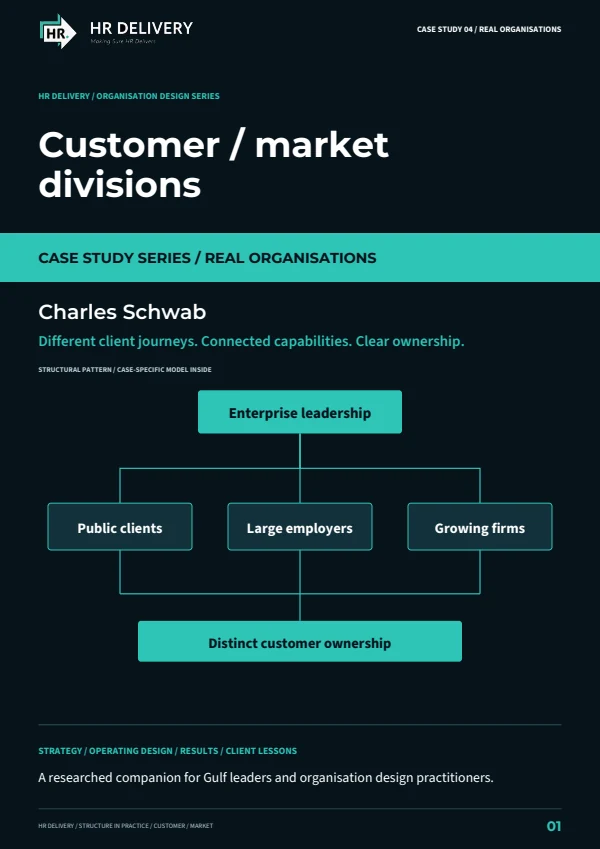
Customer / market divisions
Examine Charles Schwab through the customer and market divisions pattern: strategy, operating design, results and lessons for Gulf practitioners. A case-specific model and source evidence support comparison rather than copying a structure wholesale.
CASE STUDY 05 / 14
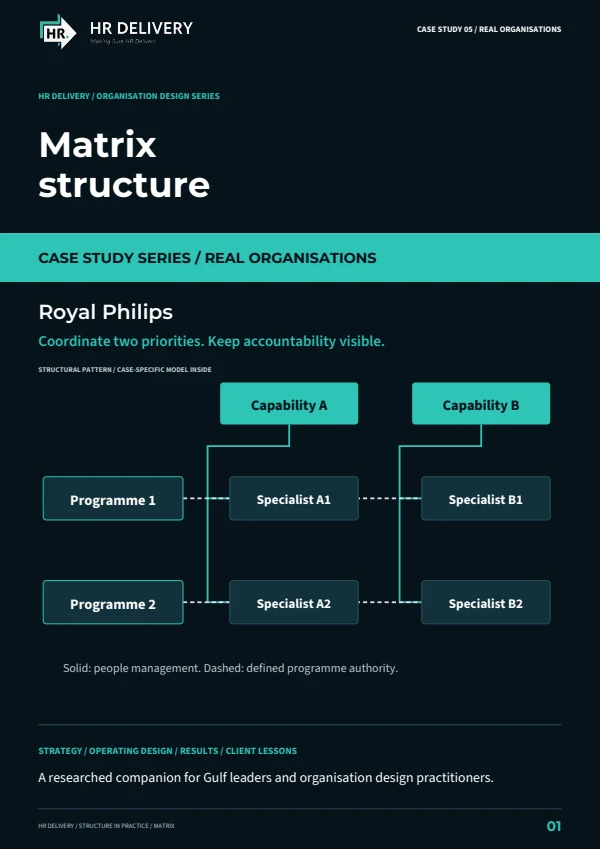
Matrix
Examine Royal Philips through the matrix pattern: strategy, operating design, results and lessons for Gulf practitioners. A case-specific model and source evidence support comparison rather than copying a structure wholesale.
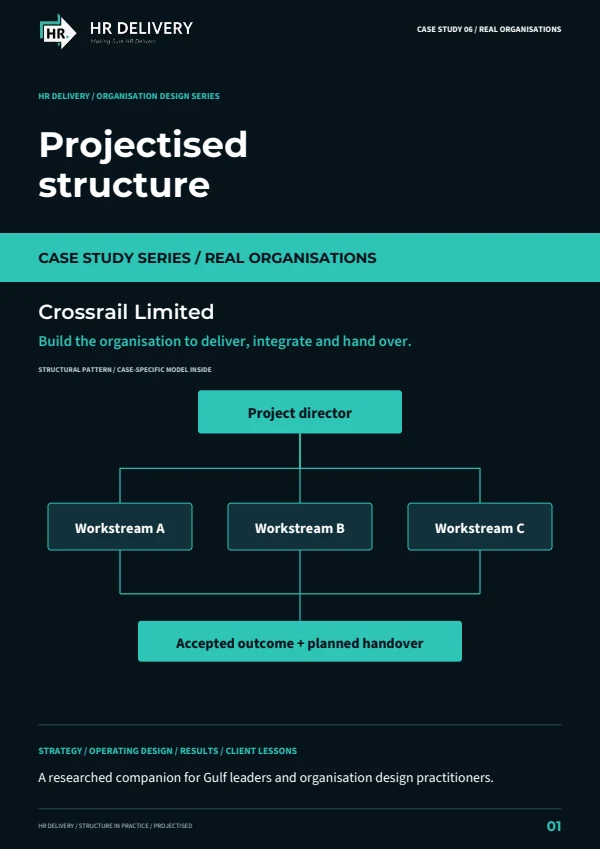
CASE STUDY 06 / 14
Projectised
Examine Crossrail Limited through the projectised pattern: strategy, operating design, results and lessons for Gulf practitioners. A case-specific model and source evidence support comparison rather than copying a structure wholesale.
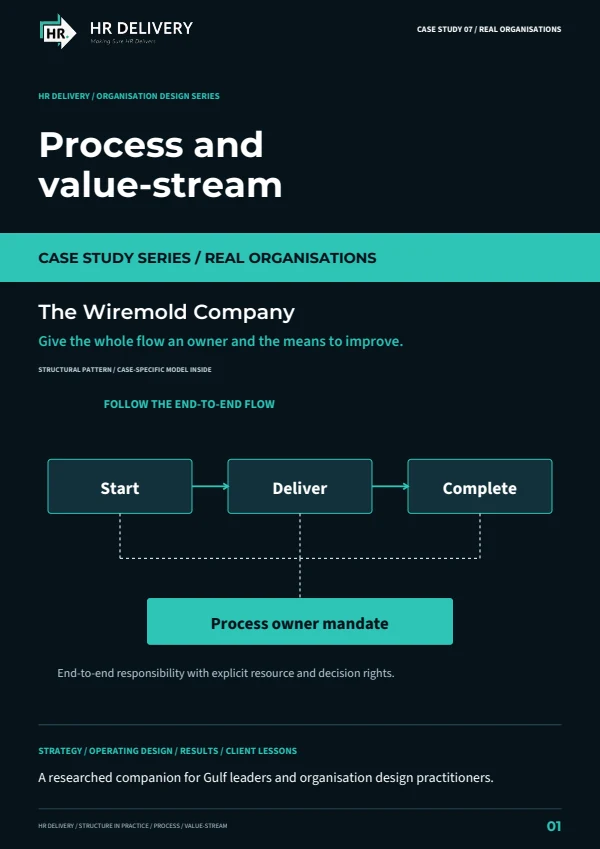
CASE STUDY 07 / 14
Process / value-stream
Examine The Wiremold Company through the process and value-stream pattern: strategy, operating design, results and lessons for Gulf practitioners. A case-specific model and source evidence support comparison rather than copying a structure wholesale.
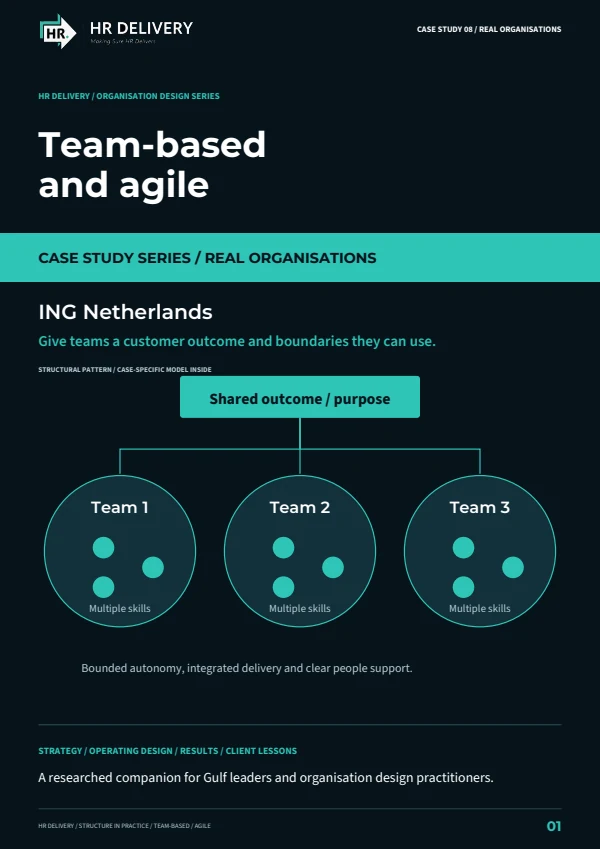
CASE STUDY 08 / 14
Team-based / agile
Examine ING Netherlands through the team-based and agile pattern: strategy, operating design, results and lessons for Gulf practitioners. A case-specific model and source evidence support comparison rather than copying a structure wholesale.
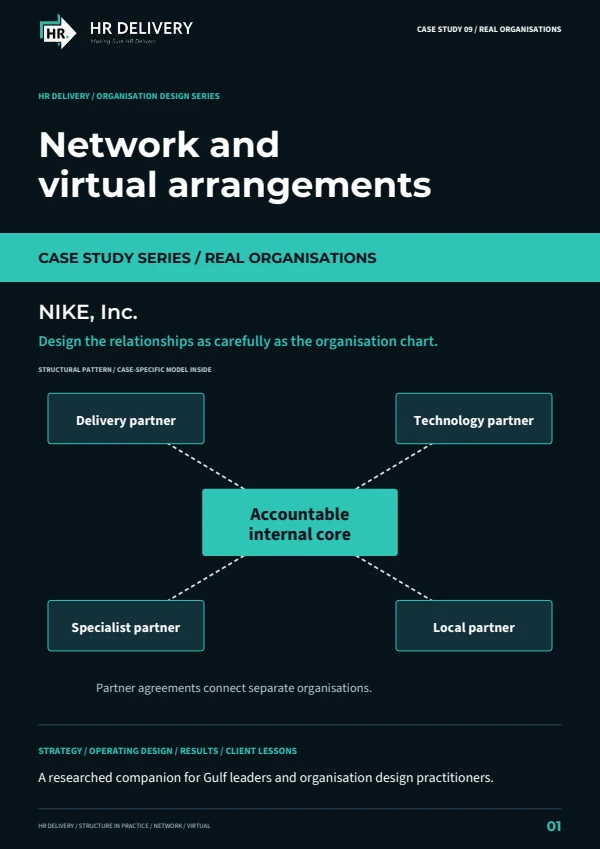
CASE STUDY 09 / 14
Network / virtual
Examine NIKE, Inc. through the network and virtual pattern: strategy, operating design, results and lessons for Gulf practitioners. A case-specific model and source evidence support comparison rather than copying a structure wholesale.
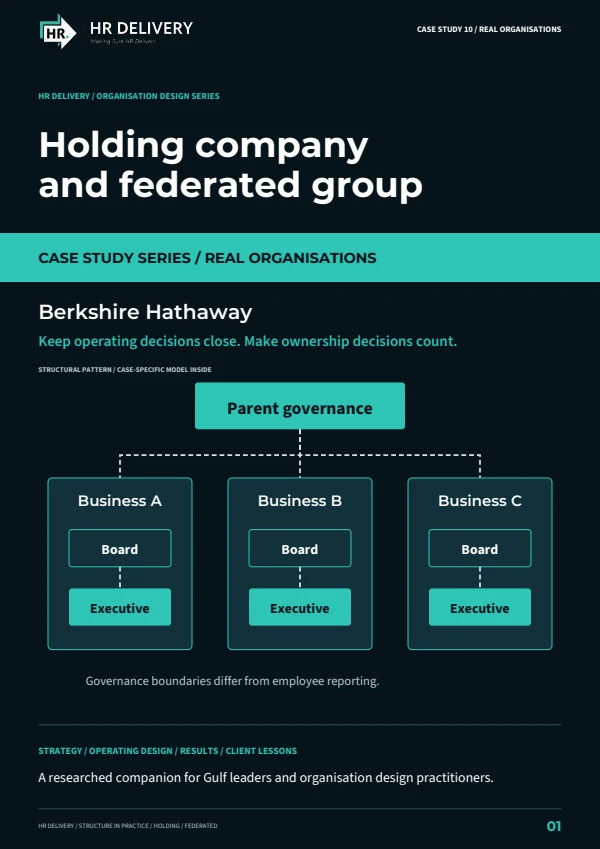
CASE STUDY 10 / 14
Holding / federated
Examine Berkshire Hathaway through the holding company and federated group pattern: strategy, operating design, results and lessons for Gulf practitioners. A case-specific model and source evidence support comparison rather than copying a structure wholesale.
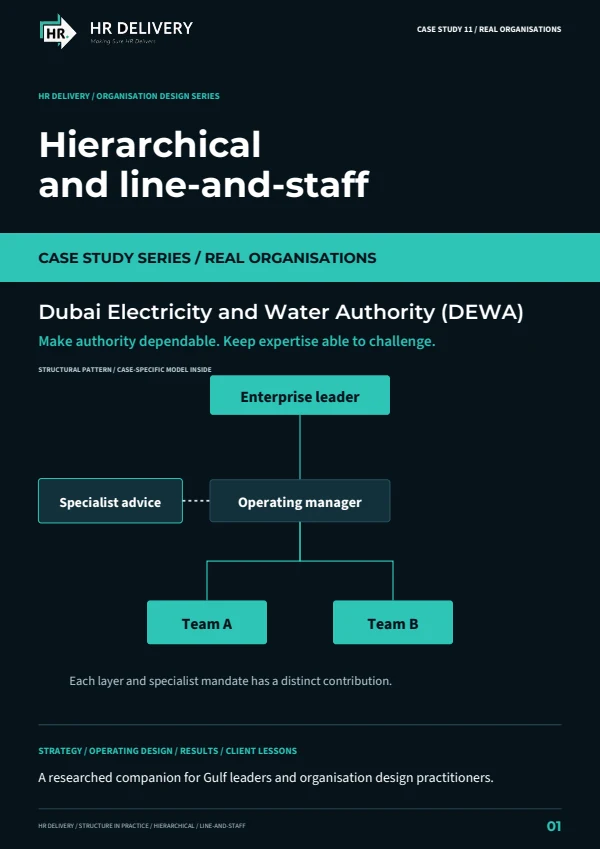
CASE STUDY 11 / 14
Hierarchical / line-and-staff
Examine Dubai Electricity and Water Authority (DEWA) through the hierarchical and line-and-staff pattern: strategy, operating design, results and lessons for Gulf practitioners. A case-specific model and source evidence support comparison rather than copying a structure wholesale.
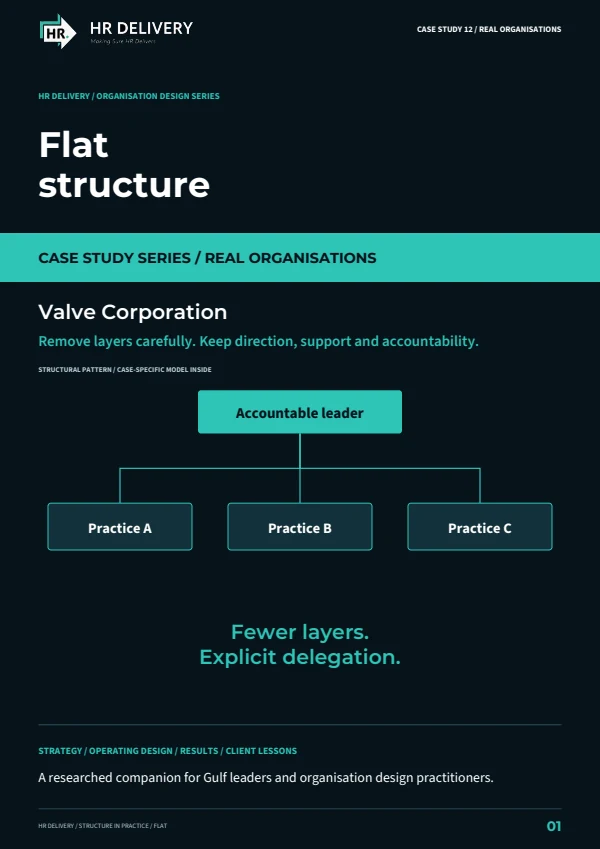
CASE STUDY 12 / 14
Flat
Examine Valve Corporation through the flat pattern: strategy, operating design, results and lessons for Gulf practitioners. A case-specific model and source evidence support comparison rather than copying a structure wholesale.
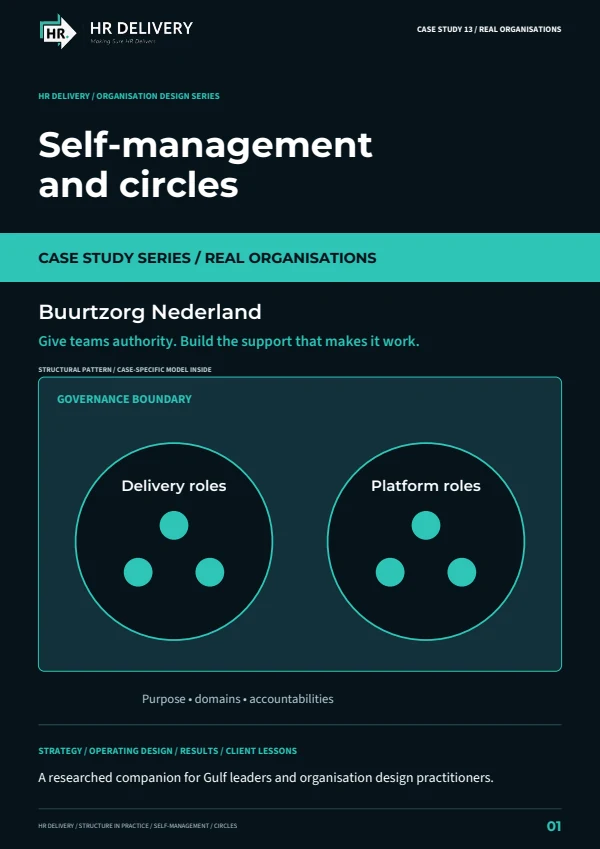
CASE STUDY 13 / 14
Self-management / circles
Examine Buurtzorg Nederland through the self-management and circles pattern: strategy, operating design, results and lessons for Gulf practitioners. A case-specific model and source evidence support comparison rather than copying a structure wholesale.
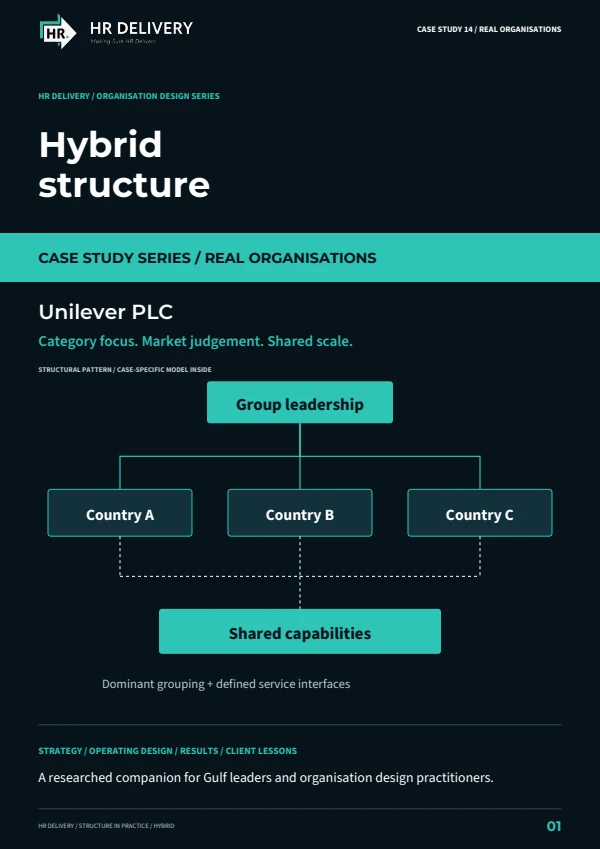
CASE STUDY 14 / 14
Hybrid
Examine Unilever PLC through the hybrid pattern: strategy, operating design, results and lessons for Gulf practitioners. A case-specific model and source evidence support comparison rather than copying a structure wholesale.
FIND THE RIGHT PRACTICE TOOL
Choose your stage or search for the work you need to do. Each original tool booklet includes its own guidance and examples. The five-stage locator follows the supplied practitioner books.
DIAGNOSE / TOOL 1
Use this review to decide which organisational connections need investigation before changing reporting lines. It brings management practices and performance evidence into one conversation without pretending that a low score proves a structural problem.
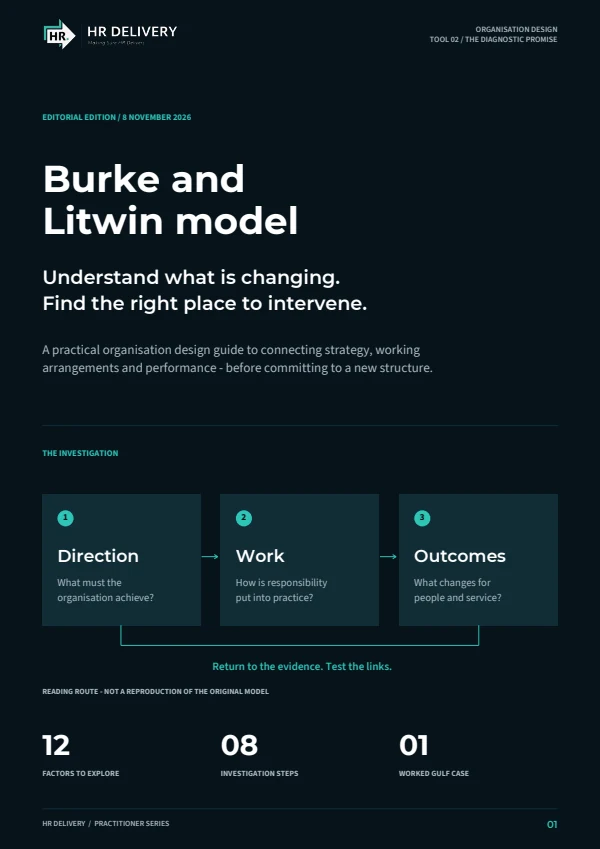
DIAGNOSE / TOOL 2
Connect strategy, working arrangements and performance before committing to a new structure. Use the Burke and Litwin model to investigate change and identify where intervention is needed.
DISCOVER / TOOL 3
Before choosing an organisational form, agree what must work for the organisation to fulfil its purpose. Critical success factors provide the small set of conditions that a design must protect, even when other attractive features have to be traded off.
DISCOVER / TOOL 4
Use value driver analysis to decide which operating features matter to different stakeholders and why. Start with the outcome people value, then trace the conditions that could produce it; do not begin with a preferred department or technology.
DISCOVER / TOOL 5
Use this matrix when leaders agree that everything matters but disagree about what should shape the operating model. Two constrained point allocations make their priorities explicit: one concerns operating focus and the other concerns the value proposition.
DISCOVER / TOOL 6
Use this review to turn a strategic ambition into an operating requirement that a proposed design can actually meet. The decision is not simply what service to promise, but what demand, skills, authority and coverage arrangements that promise requires.
DIAGNOSE / TOOL 7
Use benchmarking to identify a practice worth testing, not to import another organisation's chart or staffing ratio. The important decision is whether a performance difference remains meaningful after scope, case mix and measurement rules are aligned.
DIAGNOSE / TOOL 8
Use this focused SWOT to decide what must change for one critical success factor to be delivered reliably. Keep the factor at the centre of every entry; this is not a general catalogue of everything good or bad about the organisation.
DIAGNOSE / TOOL 9
Use this comparison to decide which working conditions must change for people to act in ways that support organisational success. Describe observable actions and investigate their context before concluding that employees need more motivation or training.
DISCOVER / TOOL 10
Use this analysis to decide what the future organisation must deliver for the people affected by it. Translate needs into observable acceptance requirements while keeping requested solutions, preferences and authorised constraints distinct.
DIAGNOSE / TOOL 11
Use gap analysis to establish exactly how current performance differs from the required state. It sizes the problem and directs investigation; it does not explain the cause or prove that a structural change will close the gap.
DIAGNOSE / TOOL 12
Use this tool to investigate why a defined failure occurs before redesigning roles around a symptom. A fishbone broadens the set of plausible explanations; evidence, comparison and testing then narrow that set.
DESIGN / TOOL 13
Use brainstorming to widen the range of plausible responses before the organisation commits to a familiar solution. Separate generating ideas from evaluating them, then preserve a clear trail from original suggestions to the shortlist.
DIAGNOSE / TOOL 14
Use Pareto analysis to decide where a focused investigation could address the largest share of a measured problem. Rank comparable categories and calculate their contribution; do not assume the data must follow an exact 80/20 pattern.
ALIGN / TOOL 15
Use this analysis to decide whether investment in better work is proportionate to the resources consumed by failure. Separate prevention and checking from rework, waste and external consequences, and distinguish released capacity from genuine cash savings.
DIAGNOSE / TOOL 16
Use this tool to work backwards from a defined organisational problem, distinguish contributing conditions from effects, and convert supported findings into improvement objectives. Keep the original qualitative problem-tree application distinct from engineering fault-tree modelling and probability calculations.
DIAGNOSE / TOOL 17
Use SWOT to choose a small set of defensible responses from evidence about internal capability and external conditions. The four categories organise discussion; the value comes from the decisions, ownership and tests that follow.
DIAGNOSE / TOOL 18
Use 7S analysis to decide what must change alongside the organisation chart for a new way of working to function. Examine the relationships among strategy, structure, systems, shared values, skills, style and staff rather than scoring seven isolated headings.
DESIGN / TOOL 19
Use a dependencies map to decide which interfaces need explicit ownership, service standards or redesign. Read every relationship directionally: a receiving role needs a defined output from a supplying role. That is different from reporting to that role.
DIAGNOSE / TOOL 20
Use this matrix to decide whether a diagnosed problem needs formal structural change, a different governance arrangement, a process or system repair, or a combination. Compare remedies against the same evidence and choose a proportionate response that can meet the requirement.
DESIGN / TOOL 21
Use this screen to choose among credible interventions that address the same diagnosed problem. Make expected impact, feasibility, cost, risk and prerequisites explicit before recommending a response or committing to implementation.
DESIGN / TOOL 22
Define success before selecting or implementing the design. Use this tool to establish measures that can show whether outcomes improve, whether essential safeguards remain intact and whether benefits reach the intended users.
DIAGNOSE / TOOL 23
Use this questionnaire to assemble an evidence-led case for changing, preserving or selectively adjusting the current structure. Ask consistent questions of different groups, then compare their answers with actual roles, decisions and case journeys.
DIAGNOSE / TOOL 24
Set design principles before comparing preferred charts. Use them to state what a viable option must achieve, what can be traded and how reviewers will test each claim. A principle should guide a decision, not merely sound agreeable.
DESIGN / TOOL 25
Start with the service promise, not the current department chart. Backward process analysis asks what customers must receive, what work produces it, what inputs the work needs and who must supply them. The resulting COPIS chain exposes design requirements before reporting lines are chosen.
DESIGN / TOOL 26
A service requirement is a testable statement of what a particular user must be able to achieve. This tool converts evidence about customer situations into standards that organisation designers can use when choosing channels, locations, roles and capabilities.
DIAGNOSE / TOOL 27
Not every process failure needs a reorganisation. This tool establishes which failures arise from the design of work, which arise from authority and accountability, and which require a change in organisational grouping. Its output is a justified alignment requirement, not a preselected organisation chart.
DESIGN / TOOL 28
A useful process map shows how work actually travels from a triggering need to an accepted result. For organisation design, its value lies in making decisions, handovers, exceptions and ownership visible - not in producing the most elaborate diagram.
DIAGNOSE / TOOL 29
Use a quick structured map to agree what a process is, what it produces and what must be investigated next. It is a compact process specification with an initial sequence - not an abbreviated organisation chart, an unstructured mind map or a substitute for detailed workflow design.
DESIGN / TOOL 30
Optimisation means improving the whole process against explicit requirements, not making one team busier or one metric look better. This tool converts a verified workflow and performance evidence into prioritised, testable changes while protecting quality and control.
DESIGN / TOOL 31
A process dependency exists when one process needs a specified output from another before it can perform to standard. This tool turns vague statements about coordination into explicit interface commitments, including timing, acceptance, failure recovery and ownership.
DESIGN / TOOL 32
The process-supplier matrix identifies who supplies each critical input, what acceptable supply means and how failure is managed. It helps designers avoid creating a service team that is accountable for results but dependent on unowned or unreliable inputs.
DESIGN / TOOL 33
Assess risk while design options can still change. This tool compares how alternative organisational arrangements could fail to meet their objectives and identifies the controls, capabilities and decision rights needed before an option can be accepted.
DIAGNOSE / TOOL 34
A service can have enough annual labour hours and still fail every morning. Service capability planning translates demand into the people, skills, equipment and continuity arrangements needed at the place and time of delivery. It tests peak coverage separately from annual workload.
DIAGNOSE / TOOL 35
An organisational capability is the ability to perform a defined kind of work reliably to a required standard. It combines people, processes, information, systems, resources and authority. This tool specifies that whole ability before deciding where it should sit or how it should be sourced.
DESIGN / TOOL 36
When the organisation needs a different behaviour, first examine whether the work environment makes that behaviour possible and worthwhile. This tool identifies practical changes to information, authority, skills, time, incentives and supervision that support an observable action.
DESIGN / TOOL 37
Test whether the proposed structure makes the required behaviour practical, coherent and reinforced by everyday decisions. A reporting-line change does not automatically create collaboration, ownership or responsiveness. This tool examines the behavioural consequences of grouping, authority, measures and coordination arrangements.
DIAGNOSE / TOOL 38
Separate genuine design limits from assumptions, preferences and established habits. A constraints review protects the organisation from infeasible proposals while preventing unsupported claims from eliminating worthwhile alternatives before they are examined.
DIAGNOSE / TOOL 39
Maturity analysis asks how consistently an organisational practice works, what evidence supports that judgement and what next level is necessary for the intended design. It is not a competition to achieve the highest possible label in every area.
DESIGN / TOOL 40
Use structured questions to challenge whether a proposed organisation can perform its work. The questionnaire tests the purpose of layers, management load, grouping, coordination and decision routes. It is a design review, not a staff-opinion survey or a validated psychological scale.
DESIGN / TOOL 41
Design how people obtain a service and how the organisation delivers, governs and recovers it before deciding which boxes appear on the chart. A service model connects users, value, channels, delivery processes, capabilities, information and provider relationships into one coherent arrangement.
DESIGN / TOOL 42
Compare the present structure with agreed design principles using the same evidence and rating anchors. A structure gap map identifies where the arrangement does not yet fit the required design, then separates the size of that gap from its importance, effort and priority.
DESIGN / TOOL 43
Choose among credible structural architectures using explicit requirements and trade-offs. Apply mandatory gates first, then compare preferences with agreed weights and evidence. The matrix supports judgement; it does not turn uncertain design assumptions into an automatic answer.
ALIGN / TOOL 44
Design the decisions that make the structure work. A governance requirements matrix specifies who may decide, what evidence they need, which matters require a forum and how unresolved or exceptional cases move to the right authority.
ALIGN / TOOL 45
A staffing norm is a locally justified planning rule for a defined service and set of operating conditions. It should explain the workload, quality, coverage and capability assumptions behind staffing - not present a convenient ratio as a universal truth.
ALIGN / TOOL 46
Translate a defined workload into the equivalent full-time capacity needed to perform it. Keep that result separate from funded establishment, actual people and the roster required for coverage. Clear time accounting matters more than apparent precision to several decimal places.
DIAGNOSE / TOOL 47
Observe one repetitive sequence closely enough to distinguish work, movement, inspection, delay and storage. The single-column process chart helps improve the method before assuming that more people or a different reporting line is required.
DESIGN / TOOL 48
Assess how much management work a role must perform, not just how many people report to it. The diagnostic grid considers geography, planning, specialisation, evaluation and change, then compares the resulting load with the manager's actual available time.
ALIGN / TOOL 49
Specify the lateral exchanges that positions need to perform their work. A position dependency map shows which role supplies what to another role, when it is needed, how it is accepted and what happens when the exchange fails. It complements reporting lines rather than replacing them.
ALIGN / TOOL 50
Make participation in work and decisions explicit. RACI distinguishes who performs a task, who is answerable for its outcome, who must contribute before it is completed and who needs to know the result. It supports role clarity but does not itself grant decision authority.
ALIGN / TOOL 51
How many people should actively make this decision together, and who can contribute without becoming a permanent group member?
ALIGN / TOOL 52
What does this position exist to deliver, what can it decide, and what evidence justifies its requirements?
DIAGNOSE / TOOL 53
How does observed effort compare with defensible required effort, and what explains the difference?
DESIGN / TOOL 54
Should this activity exist in its present form, and what is the safest better way to achieve its purpose?
ALIGN / TOOL 55
What exact organisation-design decision should be authorised, and why is it preferable to credible alternatives?
ALIGN / TOOL 56
Which option creates the strongest evidenced balance of costs and benefits on a consistent basis?
ALIGN / TOOL 57
Which activities consume shared resources, and how should those costs be attributed to services?
ALIGN / TOOL 58
What transition route can introduce the approved design with acceptable disruption and a workable recovery path?
DELIVER / TOOL 59
Which deliverables controlled by other owners must arrive before this work can start, continue or finish?
DELIVER / TOOL 60
What could prevent a safe transition, how will we recognise it early, and who will act?
ALIGN / TOOL 61
Who experiences this design change, in what way, and at what point in the transition?
ALIGN / TOOL 62
What will the proposed establishment and transition actually cost, and how does that compare with occupied spend and approved budget?
DELIVER / TOOL 63
What owned deliverables must be accepted before the new organisation can operate safely?
DELIVER / TOOL 64
An organisation chart can be implemented exactly as planned and still fail its purpose. This framework establishes what evidence will show that a design is being used, delivering worthwhile outcomes and avoiding unacceptable harm. Build it before rollout, while a credible baseline and comparison are still possible.
DELIVER / TOOL 65
Reliable evaluation begins with a reproducible counting rule. This tool turns an evaluation question into a practical collection specification: which records count, which events matter, how missing evidence is handled and who can reproduce the result. It protects organisation-design decisions from improvements that exist only in a changed spreadsheet.
DELIVER / TOOL 66
A useful progress report makes a decision easier. It shows what has changed, how that compares with the agreed position, what is known about the cause and what action is required. This booklet turns an organisation-design update into a concise, evidenced management instrument rather than a catalogue of completed meetings.
ALIGN / TOOL 67
A change strategy must make the future organisation workable for the people expected to operate it. Use this checklist to test the purpose, sponsorship, participation, capability, communication and support behind a design - not to count reassuring ticks. Every important gap should become an owned, resourced action or an explicit limit on rollout.
DISCOVER / TOOL 68
An internal redesign can fail at its boundary with customers, suppliers, authorities or communities. This tool identifies what those external relationships require, verifies the status of each requirement and translates it into a design or transition response. It keeps confirmed obligations separate from expectations, assumptions and unresolved questions.
DESIGN / TOOL 69
Bring the people who understand different parts of the organisation together to work on the same evidence, design choices and commitments. This approach is not a large presentation or a vote on a finished chart. It connects strategic direction with changes participants can help shape and begin to implement, within an explicit decision mandate.
ALIGN / TOOL 70
Explain the case for change honestly while giving people a genuine opportunity to influence the choices that remain open. 'Sell' should mean making the reasoning understandable, not manufacturing agreement.
ALIGN / TOOL 71
Make the requested decision, its evidence and its consequences clear enough for the authorised forum to decide. A presentation is successful when the decision is sound and recorded - not when every slide is delivered.
ALIGN / TOOL 72
Secure an attributable decision for the exact design, establishment and implementation scope that will be released. Support, endorsement and authority to implement are not interchangeable.
ALIGN / TOOL 73
Confirm whether an external or separately mandated authority must be consulted, then control the submission, response and resulting conditions. Do not invent a universal consultation route.
ALIGN / TOOL 74
Turn general leadership support into consistent decisions, resources and visible actions. Alignment means agreement on the choices that matter, not identical opinions or a high questionnaire score.
DISCOVER / TOOL 75
Understand who can affect the change, who is affected by it and how each group should participate. Use influence analysis to improve fair engagement - not to manipulate people or silence opposition.
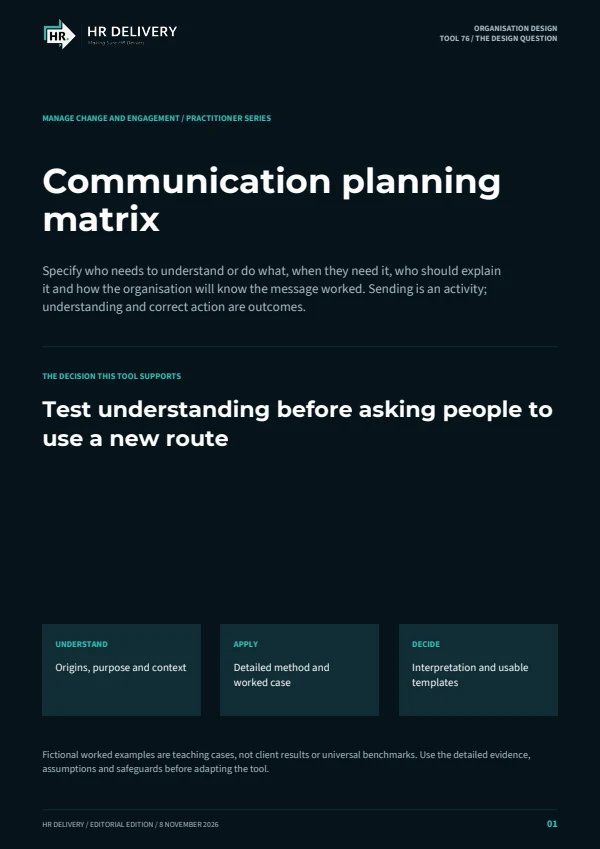
DELIVER / TOOL 76
Specify who needs to understand or do what, when they need it, who should explain it and how the organisation will know the message worked. Sending is an activity; understanding and correct action are outcomes.
No tools match. Try a different stage or search term.
PEOPLE RESTRUCTURE / STAGE E: DELIVER
Turn the approved design into a supported people transition. Choose your country, explore six connected stages and follow 18 practical steps—from preparing the change to helping the new organisation settle.
YOUR IMPLEMENTATION WORKSPACE
6 countries · 6 stages · 18 practical steps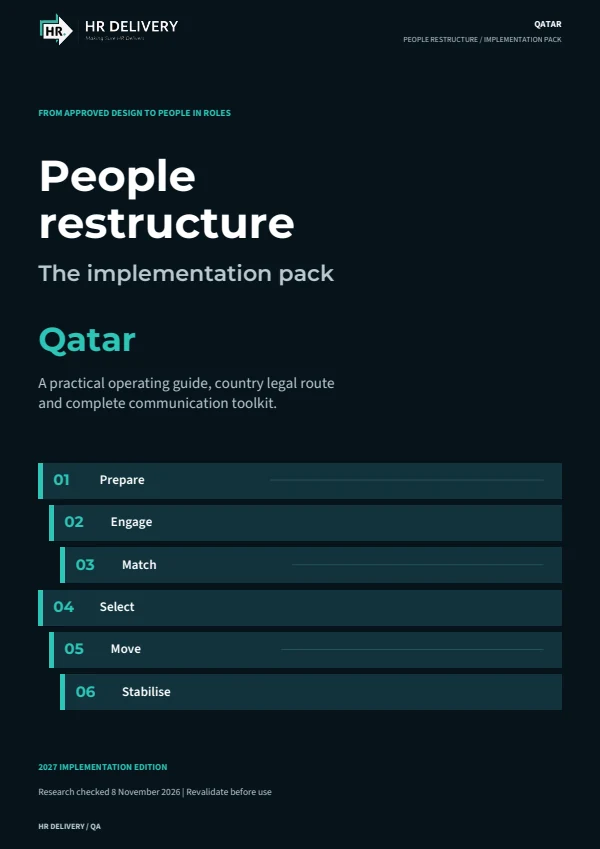
THE COMPLETE COUNTRY PACK
104 pages · 55 templates · English · View only
Apply the ordinary Qatar Labour Law only after checking current Article 3 exclusions, including the 2026 amendment. Route QFC, special-law/public/petroleum employment and excluded part-time/freelance arrangements separately. An employer name or Doha location alone does not establish scope.
See the whole journey at a glance. Select a stage, then choose its steps and guide, tools and portals, or country documents.
A shared process, with country-specific checks and documents at every stage.
Loading the stage guidance…
Browse every original letter, form and country control for this stage. Choose a practical step to see its suggested templates, or keep all stage documents in view.
No documents match this search in the selected step. Try another document type, clear the search or choose a different step.
Source edition: 2027 implementation packs. Research checked in the supplied packs: 8 November 2026. Revalidate the country route, case facts and issue approvals before using a document. The source documents are in English.
CONTINUE THROUGH THE HR DELIVERY LIBRARY
The existing organisation design and supporting resources are gathered here: toolkits, eBooks, long reads, short insights and diagnostic manuals. Filter by format to find the level of detail you need.
Diagnostic manual · Core design
Make career options visible and turn aspirations into practical development steps.
Explore resource ↗
Diagnostic manual · Core design
Help people understand change, prepare for it and put new ways of working into practice.
Explore resource ↗
Diagnostic manual · Core design
Make the behaviours, skills and capabilities needed for effective work clear.
Explore resource ↗
Diagnostic manual · Core design
Clarify what HR needs to provide and the capabilities required to deliver it well.
Explore resource ↗
Diagnostic manual · Core design
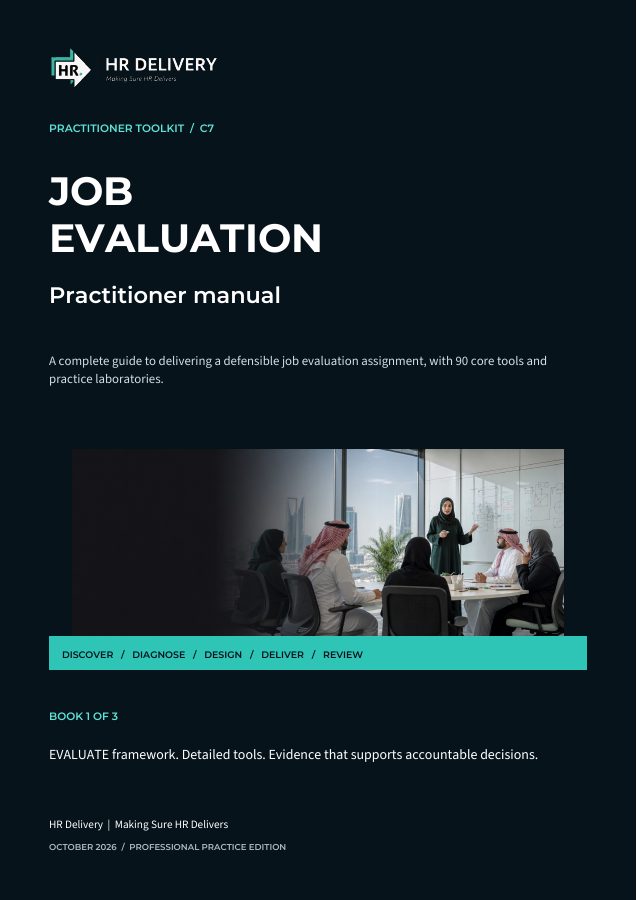
Support consistent decisions about the responsibilities, demands and value of different roles.
Explore resource ↗
Diagnostic manual · Core design
Explore eight organisational dimensions and 74 diagnostic statements to turn evidence into focused action.
Explore resource ↗
Diagnostic manual · Core design
Align structure, roles, decisions and workflows with what the organisation needs to achieve.
Explore resource ↗
Diagnostic manual · Core design
Plan the roles, skills and capacity needed as the organisation changes.
Explore resource ↗
eBook · Core design
Understand what fifty change approaches can contribute, where their limits lie and how to choose between them. Seven model families cover planned change, diagnosis, readiness, culture, adoption, complexity and sustainment. Comparisons, integrated cases and decision resources help you build a purposeful combination of approaches around a real organisational question.
Explore resource ↗
eBook · Core design
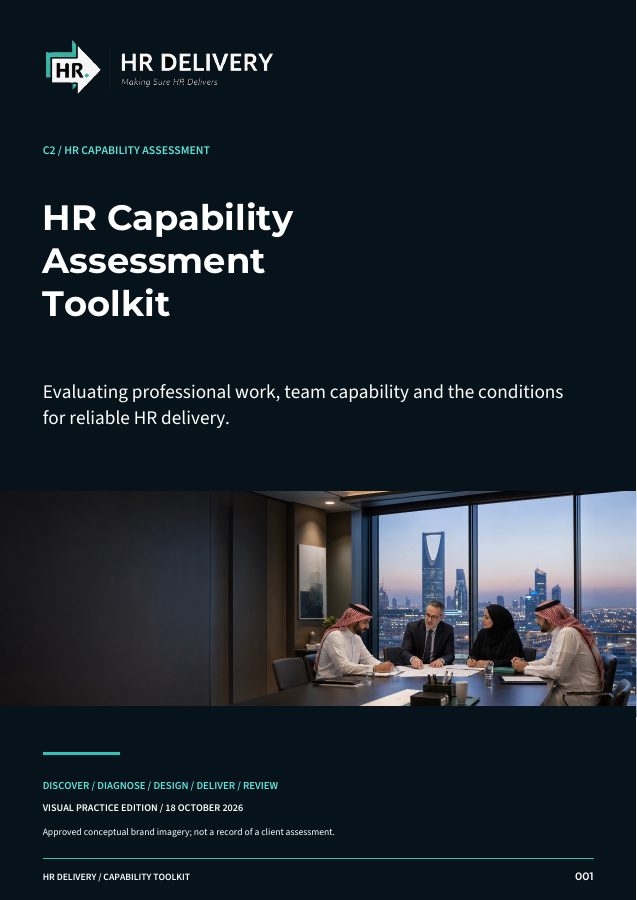
Assess what HR needs to deliver and the evidence that shows its readiness. The Capability Assessment Framework guides purpose, role expectations, evidence design, calibrated judgement and development, while a separate service-system lens examines the function and team. Worked cases, work samples and practical records help you distinguish individual proficiency from capacity or process gaps and turn findings into a focused improvement roadmap.
Explore resource ↗
eBook · Core design
Begin organisation design with outcomes and real work, then examine the structure that can support them. HR Delivery's Organisational Design Framework connects design principles, value flows, decision rights, roles, interfaces and capacity. Worked cases, option comparisons and reusable resources help you evaluate alternatives, plan transition and review whether the resulting operating model works in practice.
Explore resource ↗
eBook · Core design
Investigate organisational challenges before choosing an intervention. The eight dimensions of HR Delivery's OD Diagnostic Framework guide contracting, evidence collection, interpretation and action. Interviews, surveys, operational data, competing explanations and stakeholder discussion connect through worked cases and practical records, helping you distinguish a symptom from a supported explanation and produce findings that inform a real decision.
Explore resource ↗
eBook · Core design
Translate organisational values into clearer expectations and observable behaviour. Using the Competency and Capabilities Framework alongside the 3E Culture Map, this book distinguishes principles, behavioural indicators, technical practice and assessment evidence. Cases and working resources help you build role profiles, test their usefulness, integrate frameworks into management practice and review unintended effects.
Explore resource ↗
eBook · Core design
Examine how HR work actually moves before redesigning a process or adding technology. Learn to define value, map current work, measure performance, investigate causes and test improvements. Connected frameworks, worked cases and practical resources help you distinguish flow, quality, effort and cost, transfer ownership and evaluate whether an improvement creates useful organisational value.
Explore resource ↗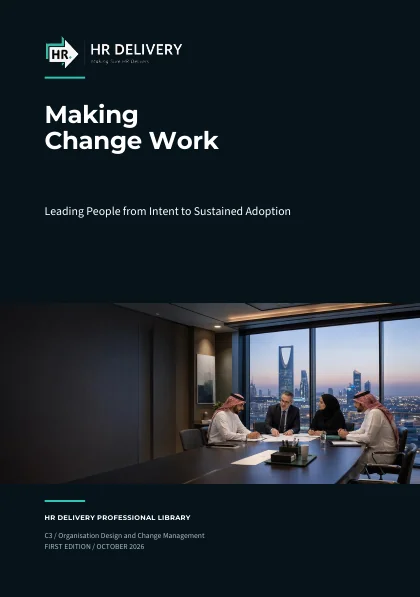
eBook · Core design
Turn an announced change into working practices people can understand and sustain. The 4C foundation connects clarity, commitment, capability and capacity with sponsorship, participation, communication and adoption. Worked cases, readiness reviews, manager conversations and practical planning resources help you investigate concerns, support implementation and evaluate what changes in everyday work beyond the launch.
Explore resource ↗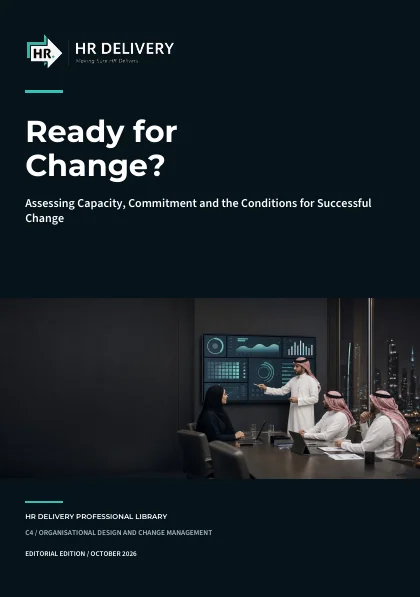
eBook · Core design
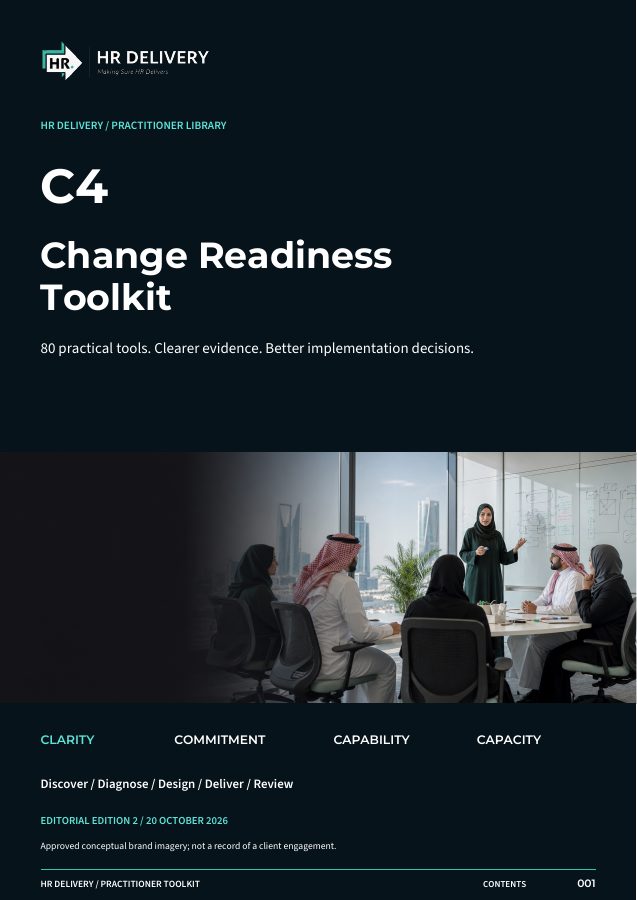
Examine whether people and systems are ready to make a proposed change work. The 4C approach distinguishes clarity, commitment, capability and capacity, then connects evidence with targeted action. Learn to design proportionate assessments, interpret different perspectives, investigate operational constraints and make reasoned implementation recommendations through worked cases and practical records.
Explore resource ↗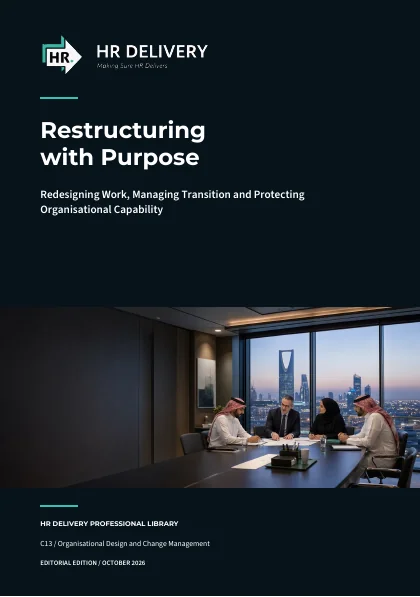
eBook · Core design
Approach restructuring through the work and capability an organisation needs, before drawing a new organisation chart. This book examines alternatives, role design, governance, people impacts and transition using HR Delivery's Organisational Design Framework. Worked cases distinguish posts, people, costs and qualified capacity, helping you plan changes that are explainable, workable and carefully evaluated.
Explore resource ↗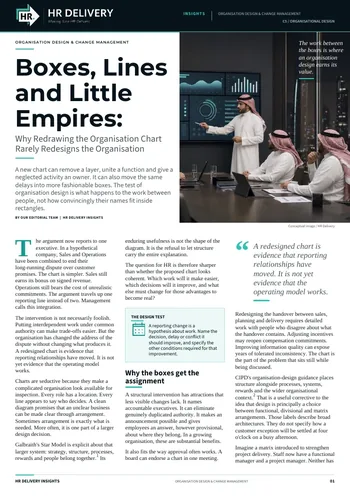

Short insight · Core design
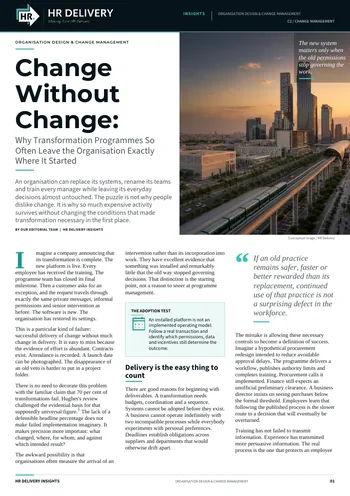
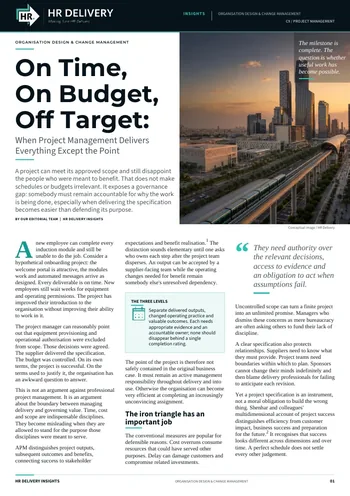
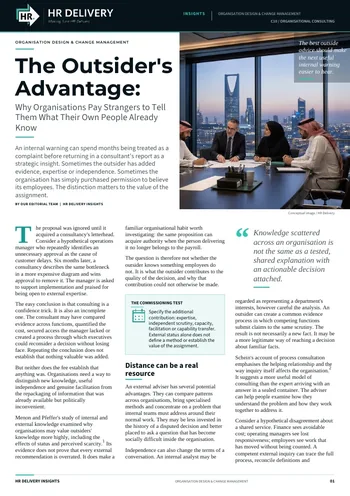
Speed is not produced by shouting faster. It is produced by designing work properly.
Explore resource ↗
Short insight · Core design
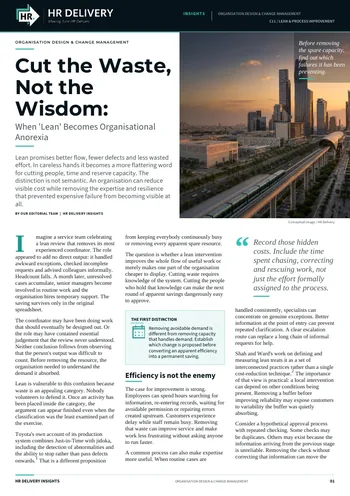
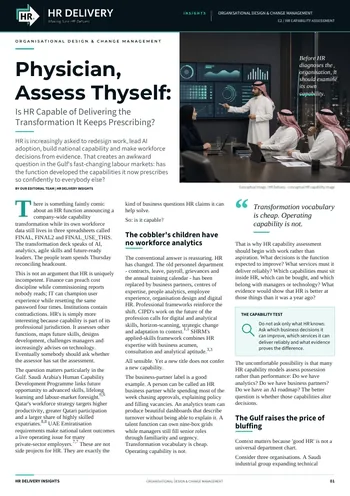
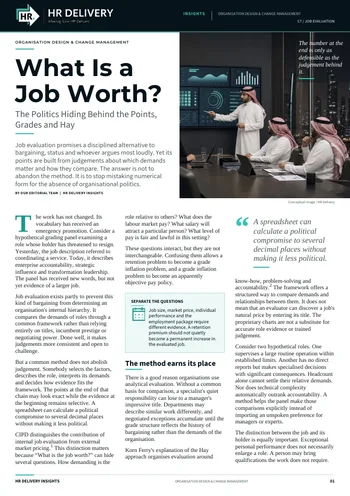
HR cannot be strategic while behaving like a help desk with a grander vocabulary.
Explore resource ↗
Short insight · Core design
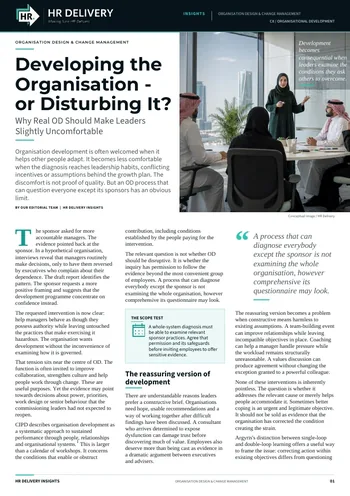
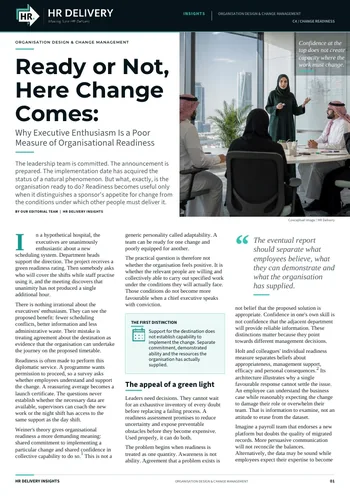
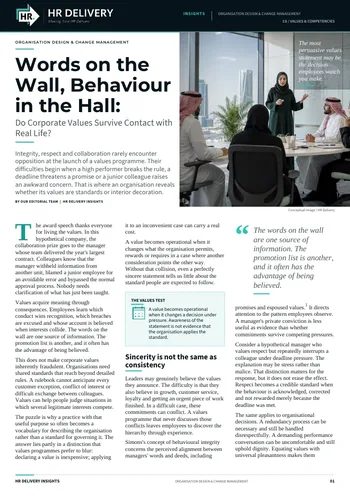
In Saudi Arabia, transformation is no longer a decorative word. It is a delivery test.
Explore resource ↗
Short insight · Core design
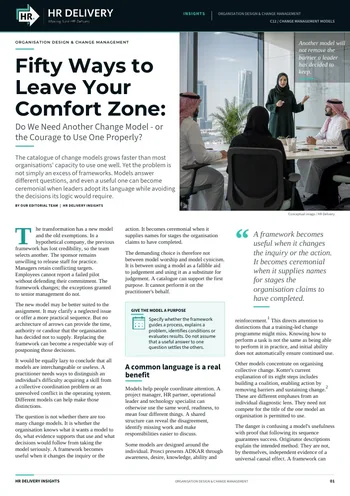
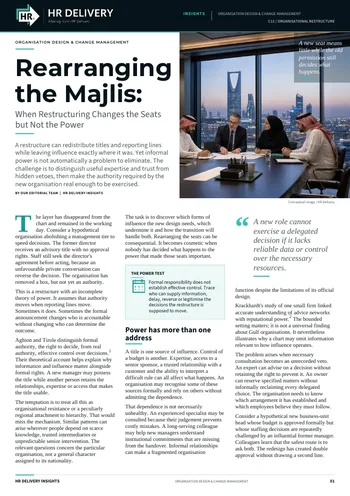
A bad restructure does not remove confusion. It merely gives confusion a new reporting line.
Explore resource ↗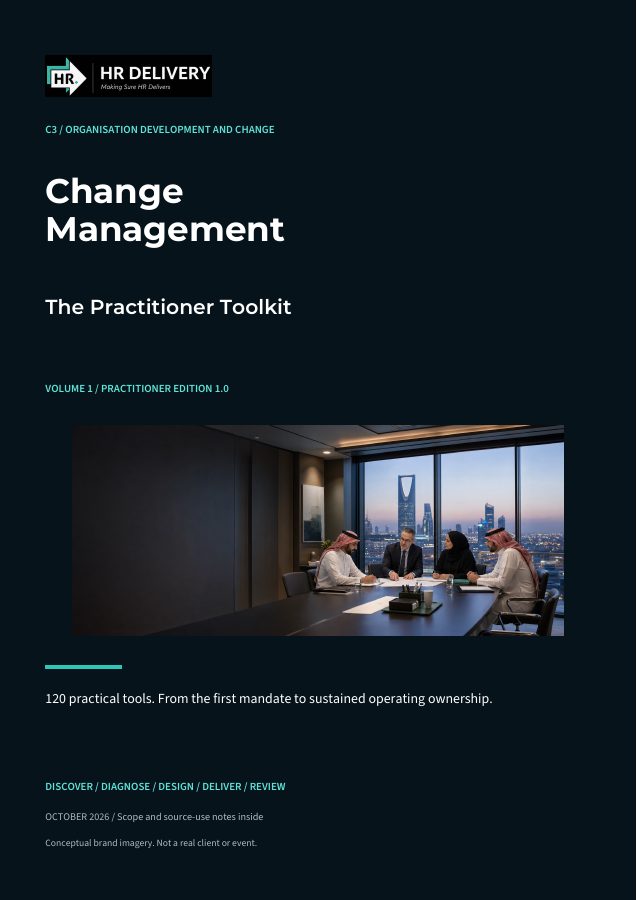
eBook · Supporting practice
Improve the work between people through clearer purpose, stronger relationships and practical team routines. Seven team-development practices connect diagnosis with roles, trust, communication, decisions and constructive challenge. Assessment guidance, live-work assignments, two worked cases and a 90-day programme help teams turn insight into shared commitments and review whether collective working is improving.
Explore resource ↗
eBook · Supporting practice
Connect pay, benefits and recognition through the Reward Decisions Model, keeping job value, market evidence, contribution and funding clear. Two worked cases and fifteen practical resources guide reward principles, structures, movement rules, affordability, fairness, implementation and governance so the organisation can explain and operate its arrangements.
Explore resource ↗
eBook · Supporting practice
Design HR around the services people need and the capacity and expertise required to deliver them. This book connects the HR mandate, workload, operating model, roles, technology and investment through the Provision-to-Capability Map. Two complete worked operating models and twelve practical resources help you compare arrangements, plan transition and review service performance.
Explore resource ↗
eBook · Supporting practice
Build an HR strategy that connects business priorities with practical choices about people and work. Following the Strategy-to-Value System, this book develops diagnosis, strategic outcomes, investment, governance and delivery. Worked strategies, decision examples and reusable resources help you explain trade-offs, involve stakeholders and review the contribution of your people agenda.
Explore resource ↗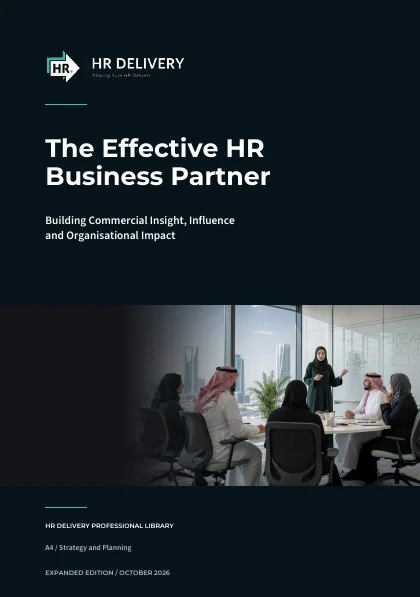
eBook · Supporting practice
Develop the judgement and practical habits of an effective HR business partner. Explore the role's origins, understand how the business works, agree expectations, diagnose requests and influence decisions with evidence. Cases, working resources and a twenty-four-week development programme connect commercial understanding, sensitive conversations, specialist collaboration and accountable delivery with practice and feedback.
Explore resource ↗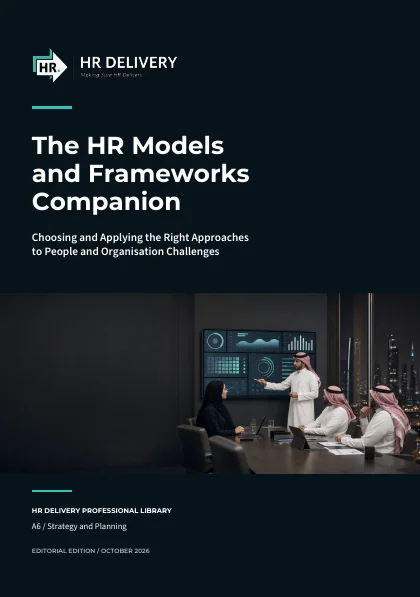
eBook · Supporting practice
Choose frameworks for the decisions you need to support. Four foundation chapters explain diagnosis, selection and application, followed by five-page guides to all twenty-nine HR Delivery frameworks. Integrated cases, comparisons and practical records show how to combine models proportionately, challenge assumptions and connect evidence with action across seven areas of HR and OD.
Explore resource ↗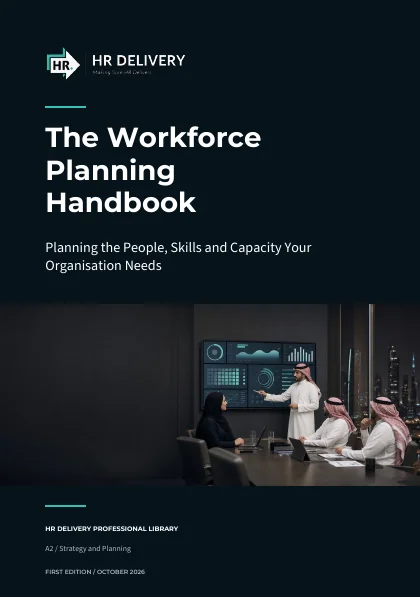
eBook · Supporting practice
Connect organisational ambition with the people, skills and capacity needed to deliver it. Using the 8A Strategic Workforce Planning System, the handbook explains workforce baselines, demand and supply, critical gaps, response options and financial planning. Two complete worked plans and practical resources help you test assumptions, secure ownership and adapt decisions as evidence changes.
Explore resource ↗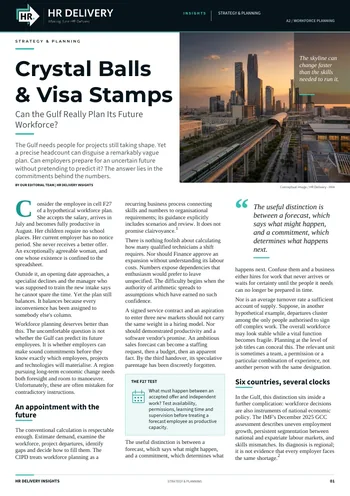

Short insight · Supporting practice
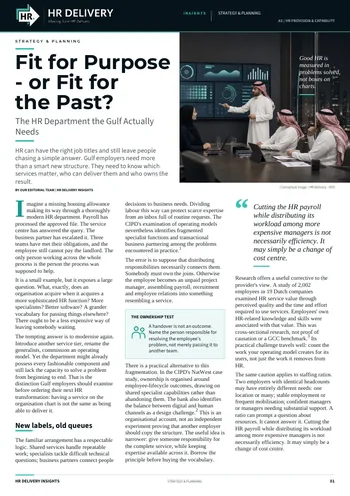
Ambitious talent does not leave because it dislikes the office furniture. It leaves because the future looks foggy.
Explore resource ↗
Short insight · Supporting practice
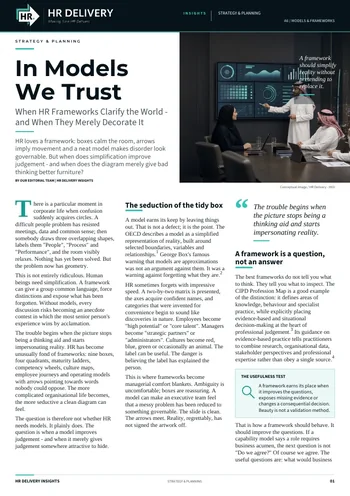
Many organisations have an admirable habit of choosing the medicine before examining the patient.
Explore resource ↗
Short insight · Supporting practice
Knowledge transfer is one of those phrases that sounds successful until someone asks what, exactly, has been transferred.
Explore resource ↗
Short insight · Supporting practice
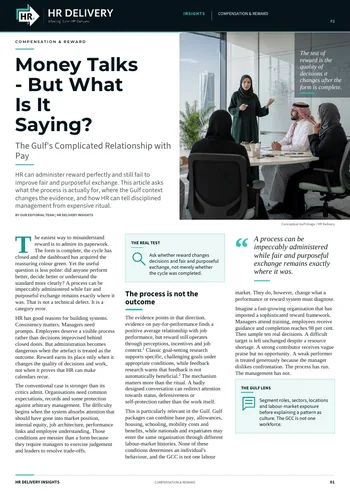
Most HR dashboards are guilty of a quiet crime: they report what is easy to count rather than what is useful to know.
Explore resource ↗
Short insight · Supporting practice
Governance is rarely glamorous, which is one reason weak organisations neglect it until something expensive happens.
Explore resource ↗
Short insight · Supporting practice
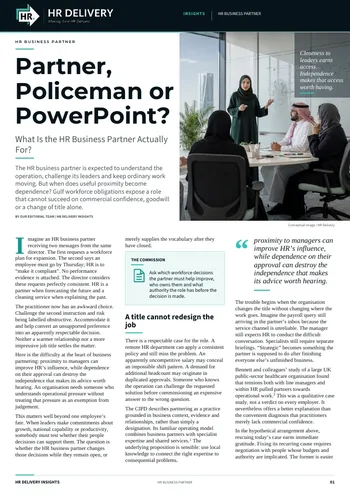
There is an old version of HR that waits outside the meeting room and asks what has already been decided. It is tidy, loyal, reactive and increasingly obsolete.
Explore resource ↗
Short insight · Supporting practice
A spreadsheet can count heads. It cannot, by itself, imagine capability.
Explore resource ↗
Short insight · Supporting practice
Busyness is not evidence of readiness. It is often evidence that readiness is missing.
Explore resource ↗
Short insight · Supporting practice
Strategic workforce planning is the art of refusing to be surprised by your own growth.
Explore resource ↗
Short insight · Supporting practice
HR maturity is not measured by the number of policies, systems or initiatives a function can display. It is measured by whether the business receives better decisions because HR exists.
Explore resource ↗
Short insight · Supporting practice
Many HR projects fail not from lack of intelligence, but from a surplus of opinion and a shortage of discipline.
Explore resource ↗
Short insight · Supporting practice
A board that only asks HR about headcount has decided not to know very much.
Explore resource ↗
Short insight · Supporting practice
The announcement is not the change. It is merely the noise that precedes the hard part.
Explore resource ↗
No matching resources. Adjust your filters.
CONNECT THE WORK
Open the Organisation Design Department Portal for workforce planning, job descriptions, evaluation, organisation charts, layers and spans, and salary modelling. Use the stage guides to connect those tools with the wider HR Delivery workspaces.
WHAT THIS HELPS YOU DO
TOOLS, STUDIOS & WORKING RESOURCES
Open the existing portal for its tools and resources. Access within a studio follows the roles and permissions set for that workspace.
Use classification, responsibilities, duties and job description resources. The Job Description Bank helps find relevant role material.
Work through the supported evaluation factors and retain role evaluations and reports. Keep grading connected to the content and responsibility of the role.
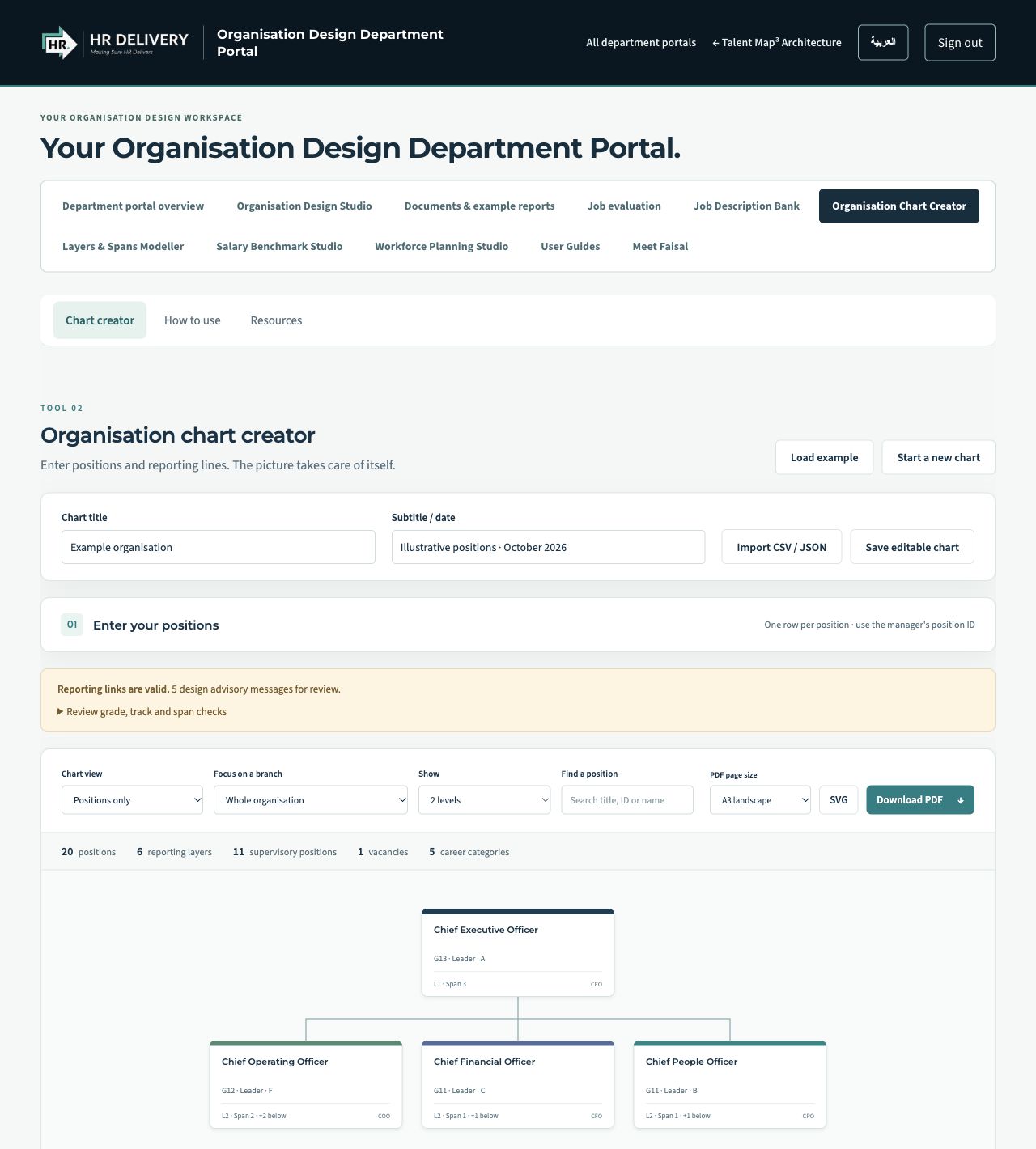
Enter positions and reporting lines, adding employee names when needed. Use role-only and named views to discuss the structure and its people.
Explore reporting spans and organisational layers alongside the chart. Test structural questions with a clearer picture of the organisation.
Bring demand, capacity, capability and cost into planning scenarios. Explore demonstrations and build a plan using approved organisational inputs.
Model roles and headcounts across selected countries. Use a common comparison currency to discuss location and cost assumptions.
FROM A QUESTION TO A USEFUL NEXT STEP
Specialist AI support helps with research, structure and first drafts. Contact HR Delivery to arrange the service and agree the support your organisation needs.
Meet Faisal ↗Start with the purpose, work demand and decisions that need improving.
Develop role information, charts, workforce scenarios and cost comparisons.
Use the reports and documents to agree responsibilities and next actions.
EXPLORE THE PUBLIC RESOURCES
YOUR DEPARTMENT WORKSPACE
Explore how roles, reporting lines, workforce demand and cost fit together. The workspace provides practical entry points for job design, evaluation, organisation charts, spans and levels, workforce planning and salary comparison. Move from a structural question to a working model and use the supporting guidance to explain the choices.
Faisal / HR DELIVERY
Tell us your organisation, the work you need help with and the outcome you want to achieve. We will discuss the appropriate membership or service.
